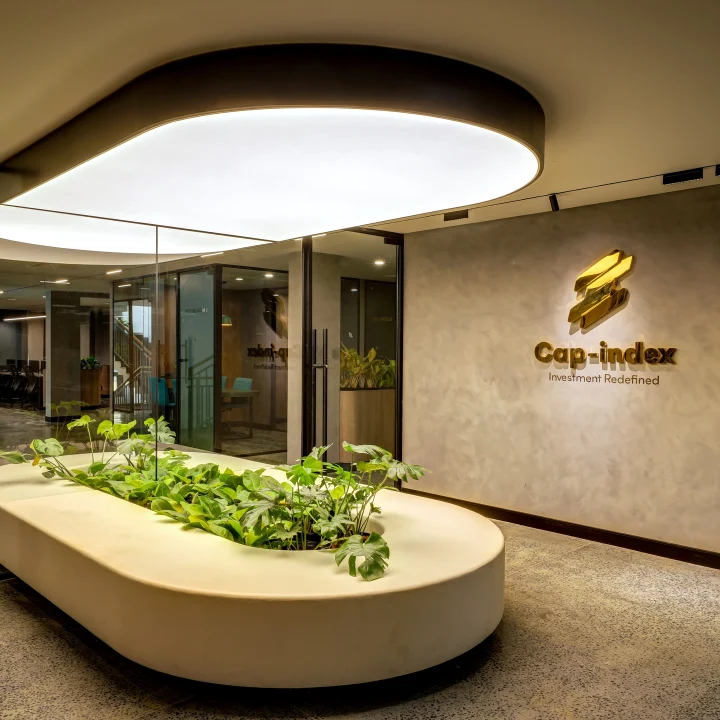
The Meron Agar office was designed to create a refined, modern workspace that reflects the company’s professional identity while fostering efficiency, collaboration, and comfort. The design aims to balance functionality with a contemporary aesthetic, ensuring that employees experience a workspace that supports productivity while maintaining a welcoming atmosphere.
The interior approach emphasizes clarity, organization, and simplicity, allowing the workspace to feel calm and structured while incorporating subtle design elements that enhance the overall visual experience.
Design Concept
The design concept centers around minimal modernity with warm professional tones. Clean lines, soft textures, and a balanced palette of teal, wood, and neutral greys establish a calm yet visually engaging environment.
Glass partitions play a significant role in maintaining openness and transparency throughout the office, while natural materials such as wood finishes add warmth and character. The design carefully integrates functional workspaces with collaborative areas, ensuring flexibility and efficiency across the office.
The combination of contemporary lighting, muted colors, and thoughtful detailing creates a workspace that feels sophisticated yet comfortable.
Workspace Planning
The layout is organized to provide a clear flow between different working zones, ensuring smooth circulation and easy interaction between teams.
Open workspaces, meeting rooms, and private cabins are strategically placed to maintain a balance between collaboration and focused work. Transparent glass partitions allow visual connectivity across departments while still providing acoustic privacy where required.
The planning ensures that the office remains organized, spacious, and adaptable to evolving workplace needs.
Conference & Meeting Areas
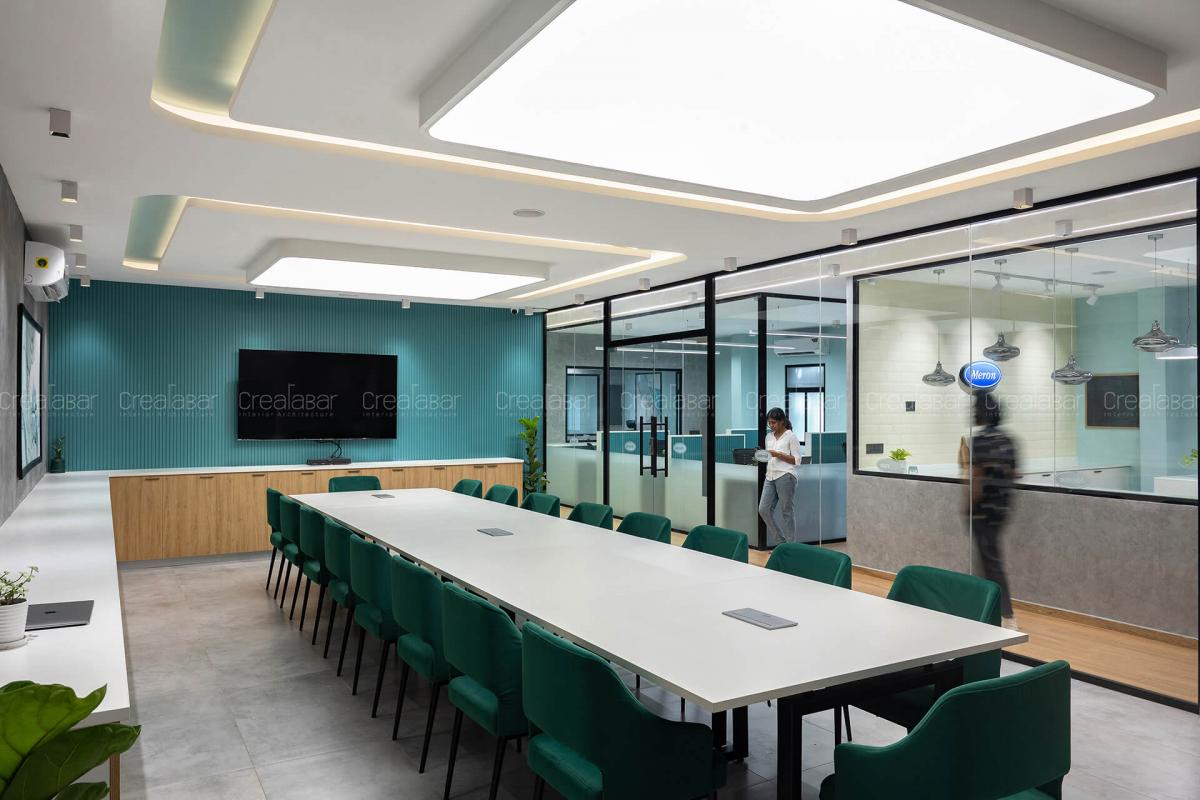
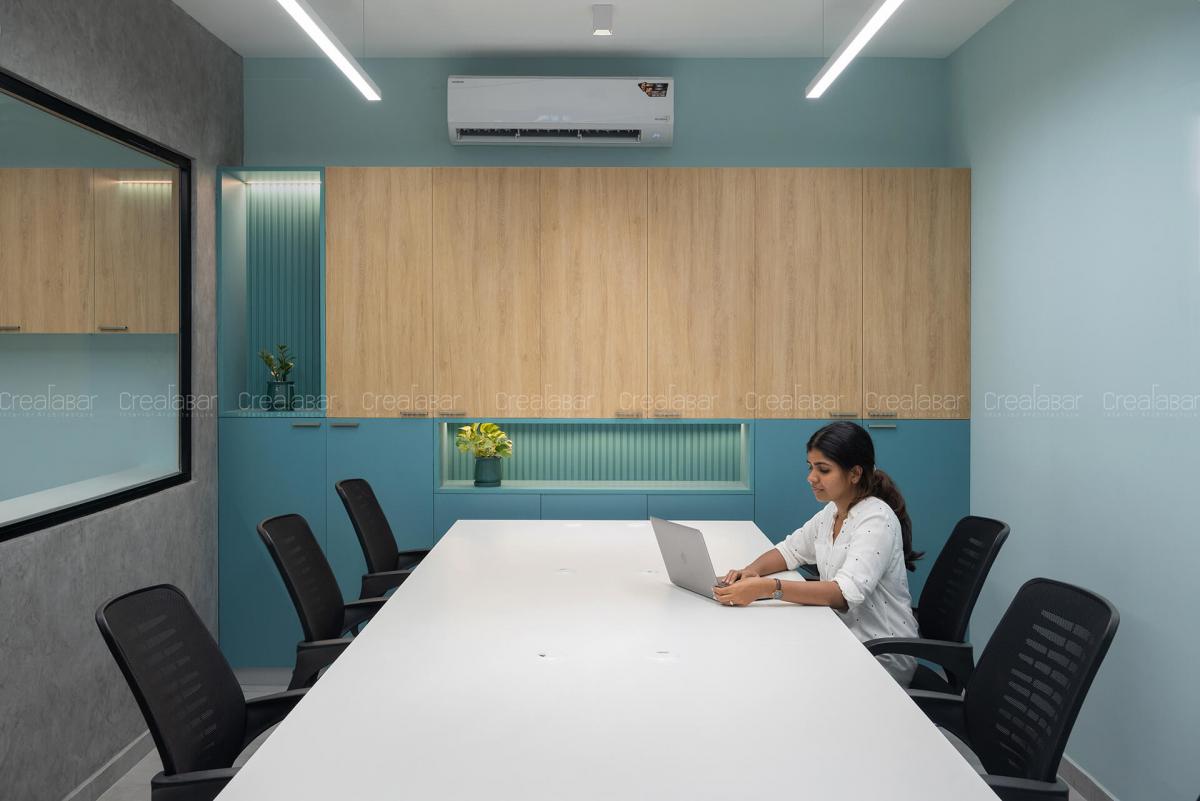
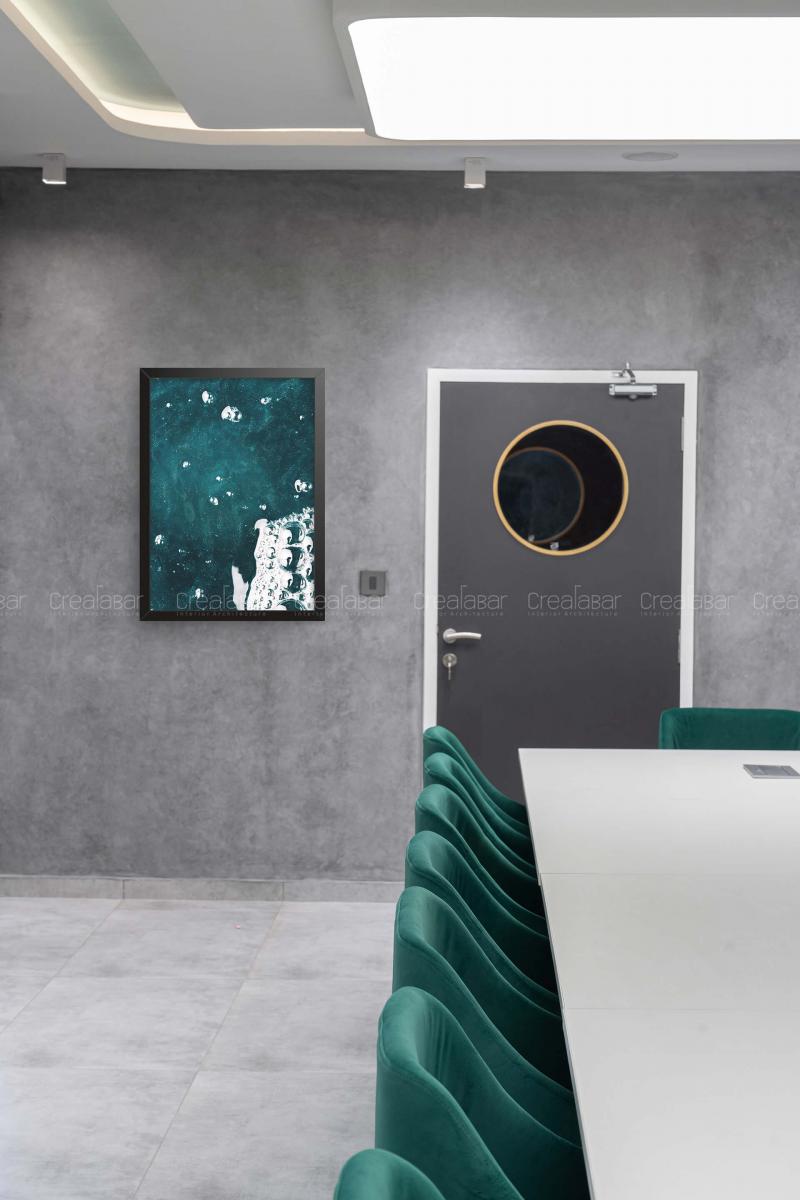
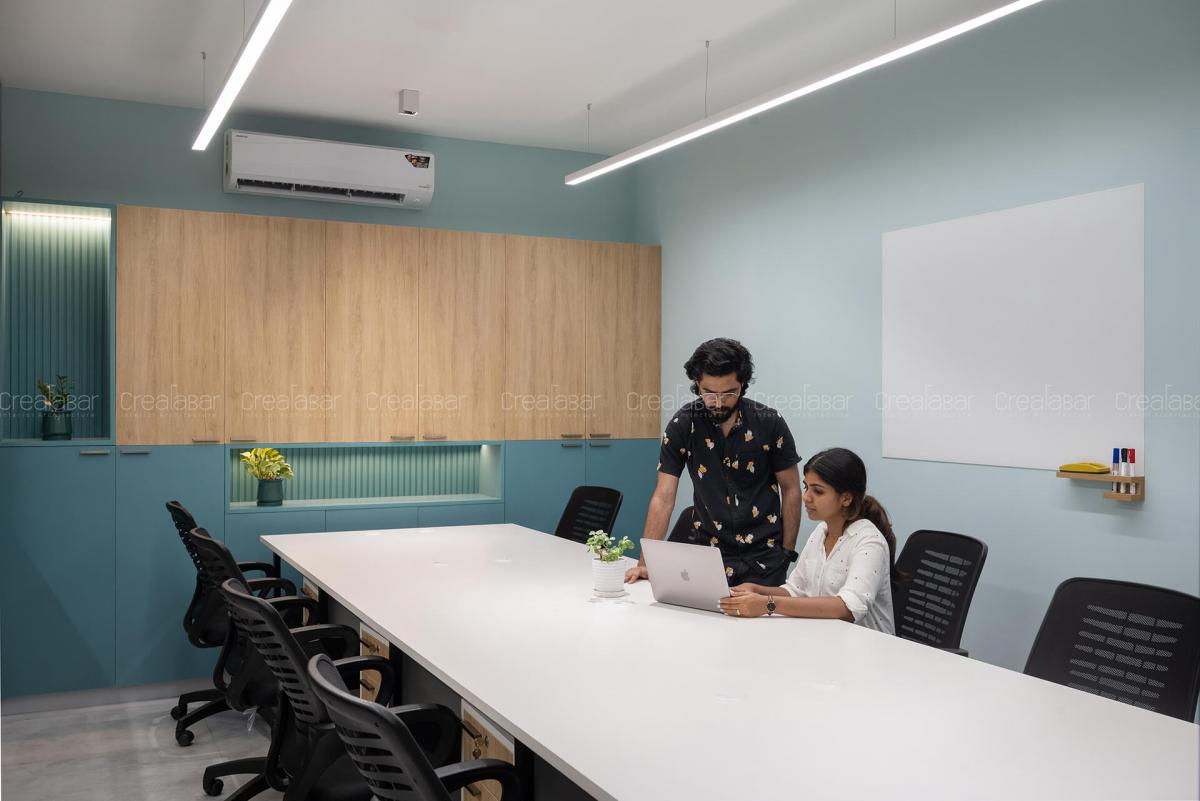
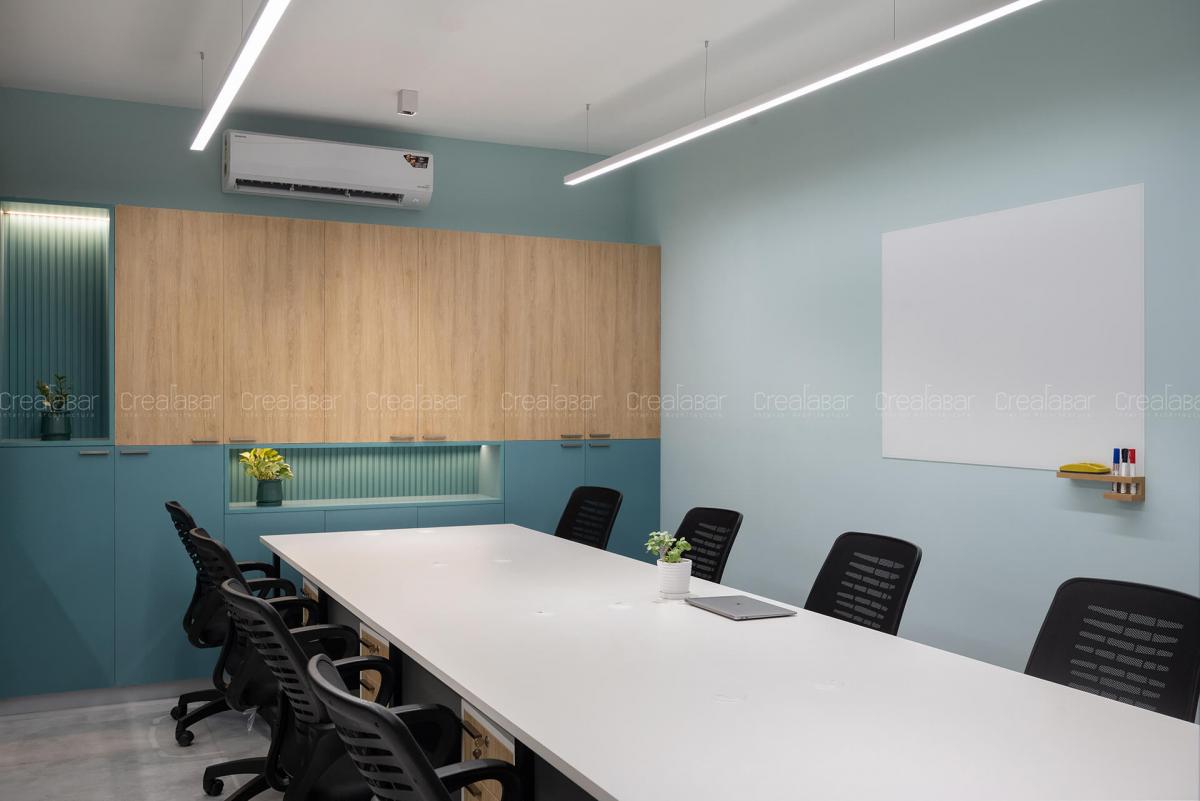
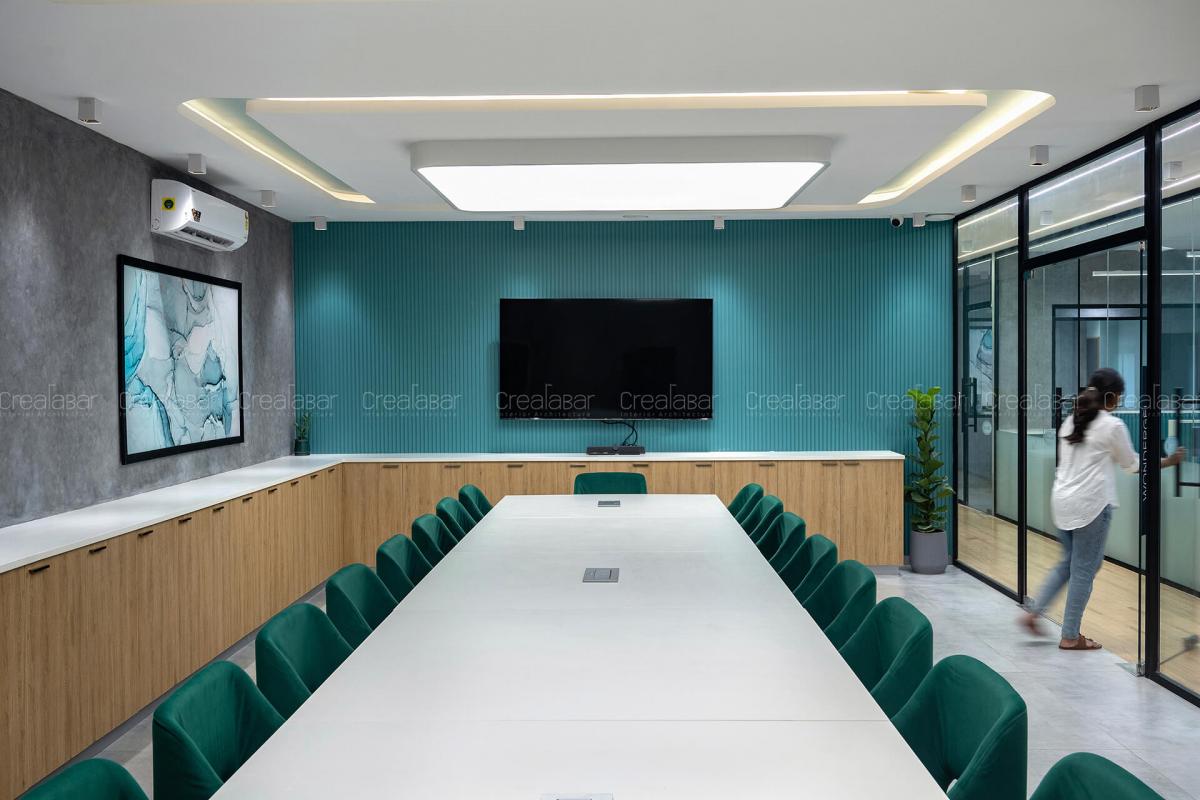
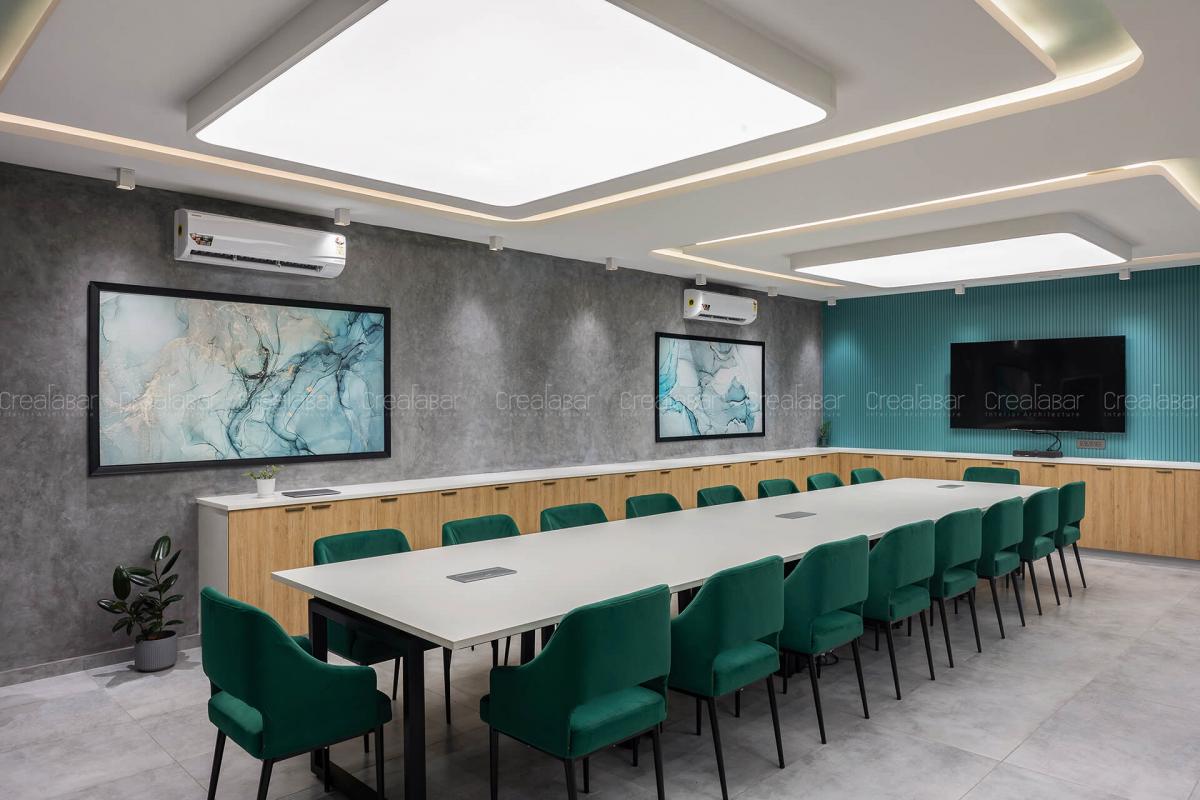
The conference room is designed as a central hub for discussions, presentations, and team collaboration. A long central table paired with comfortable seating allows larger teams to gather comfortably.
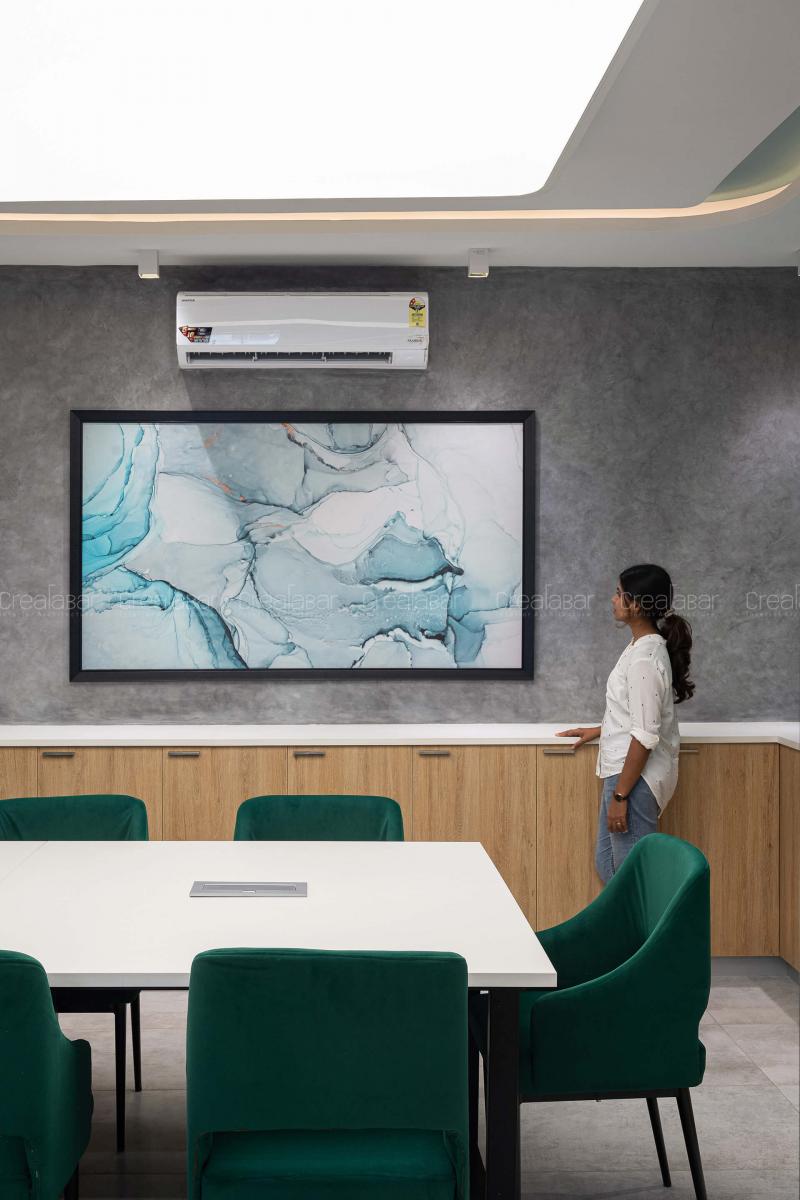
The backdrop features a textured teal wall panel integrated with concealed storage and a mounted display screen, creating a clean and functional presentation area.
Layered ceiling lighting enhances the atmosphere of the room while ensuring uniform illumination during meetings.
Executive Cabin
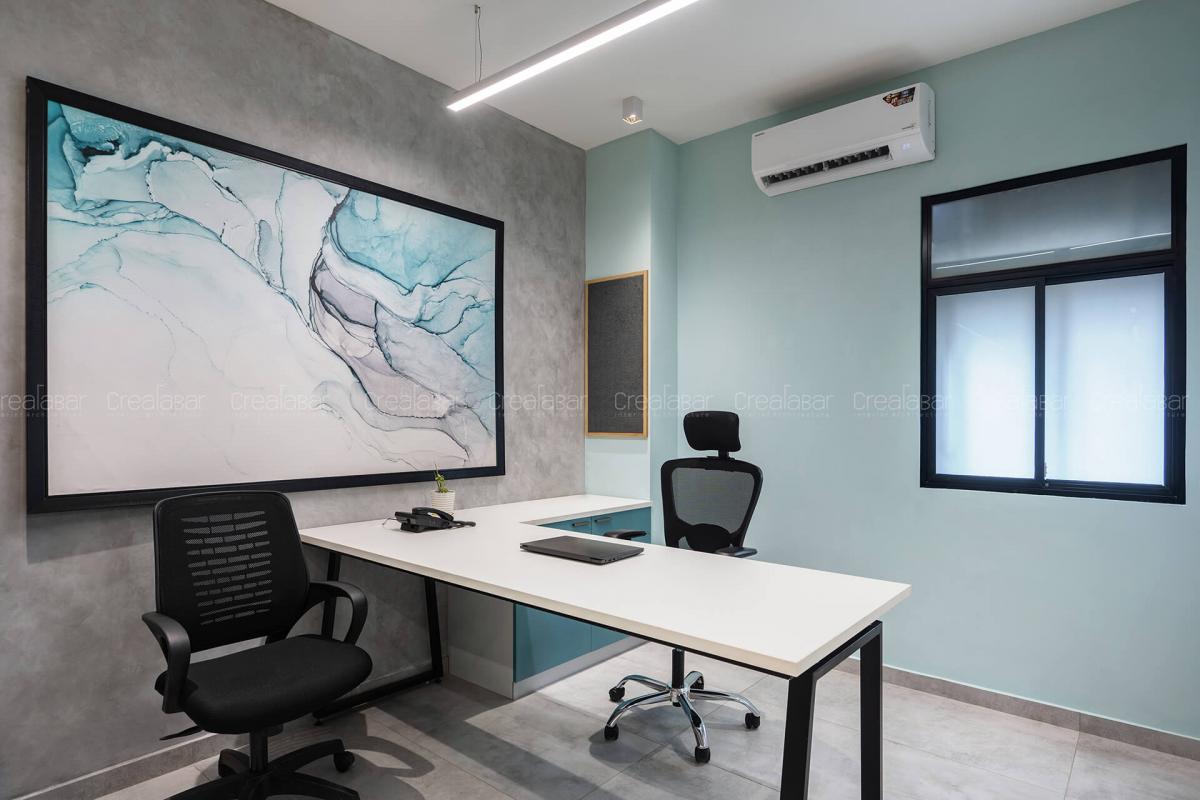
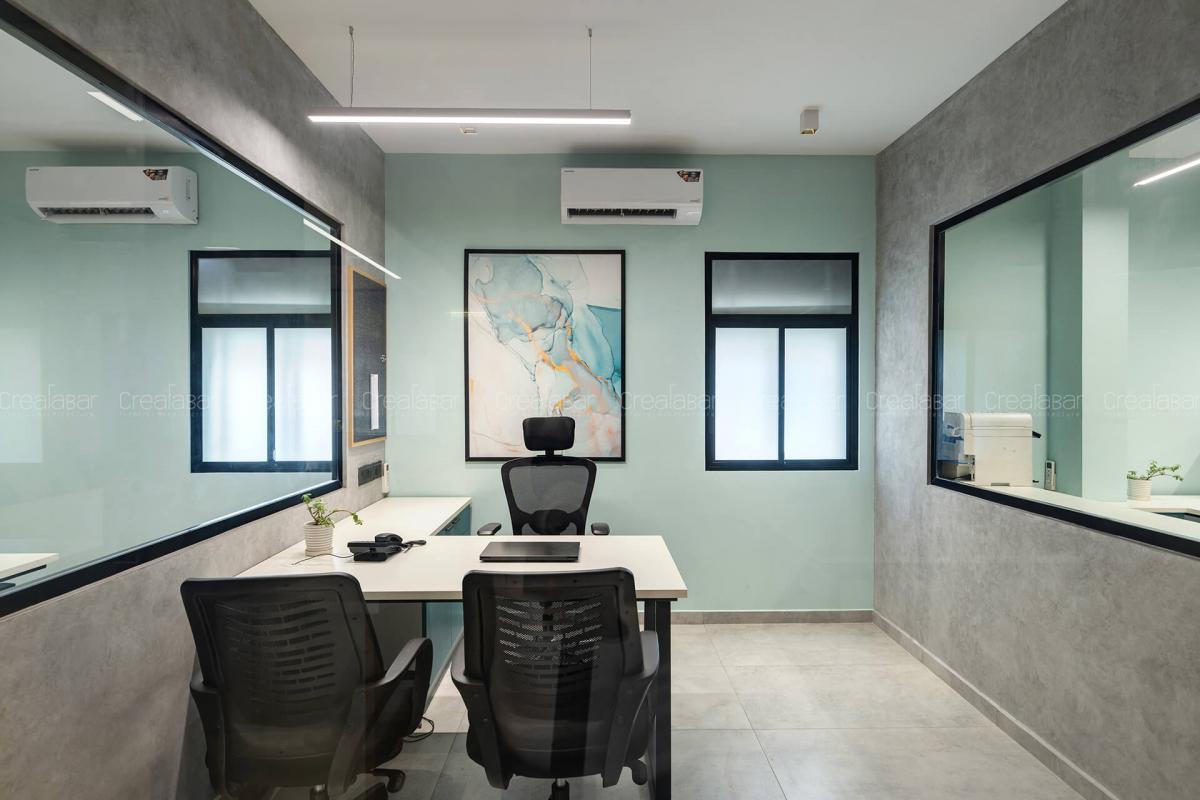
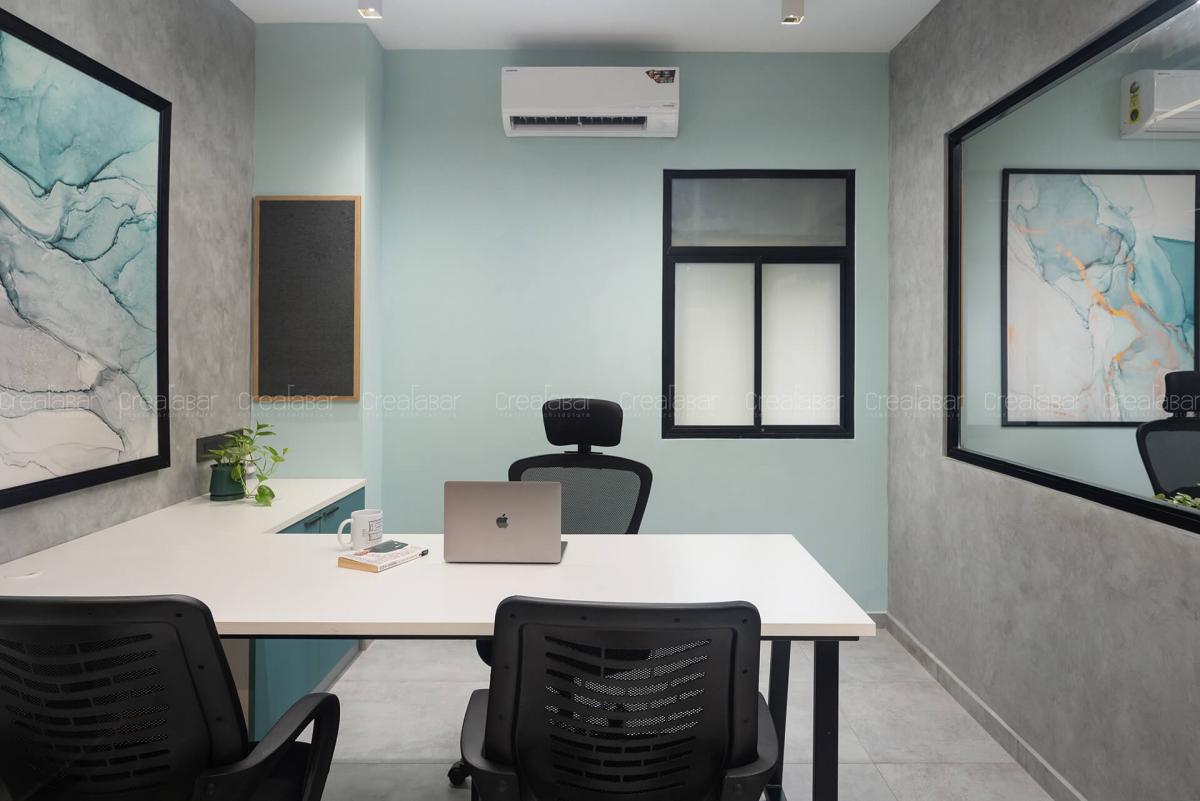
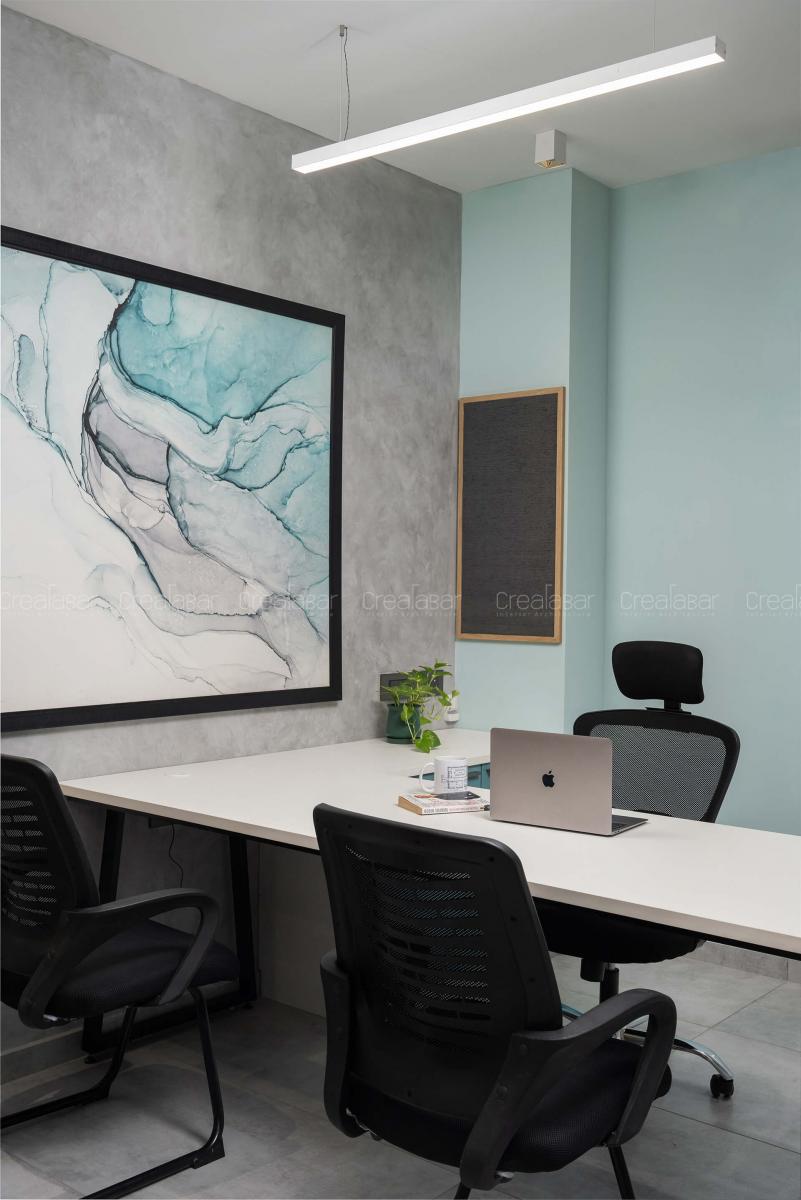
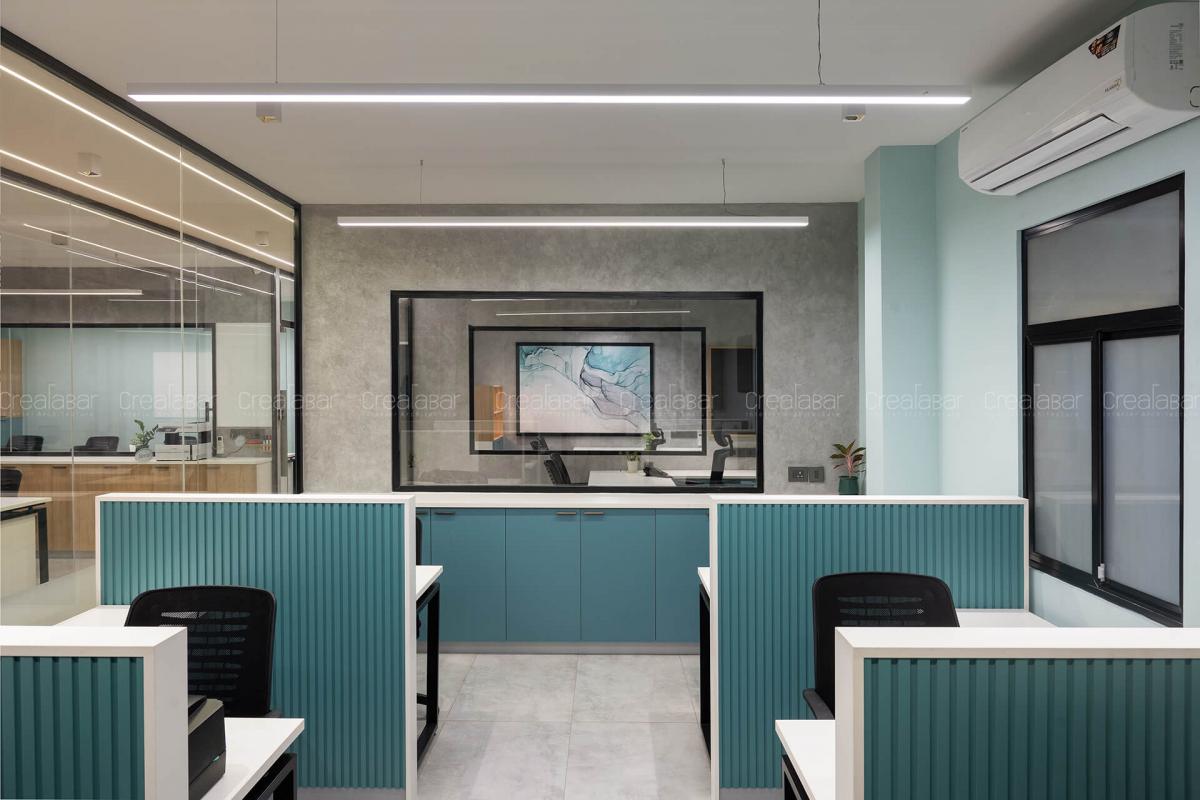
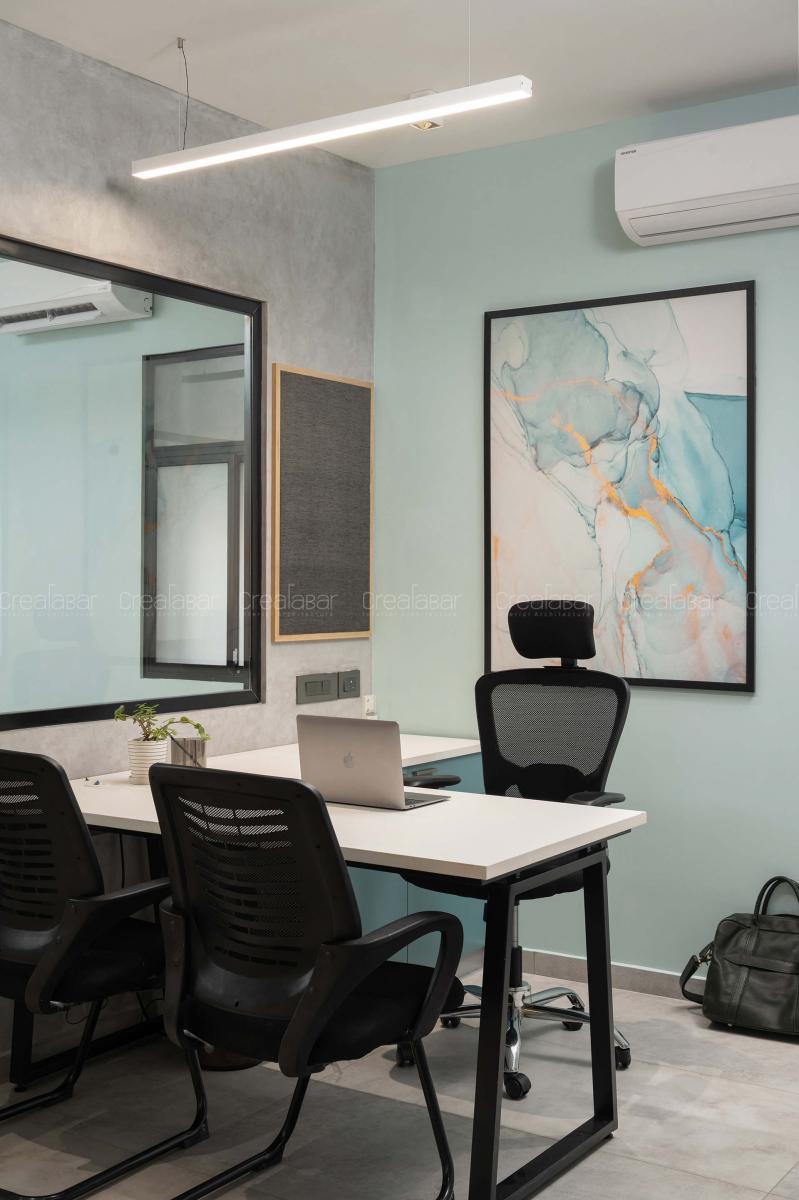
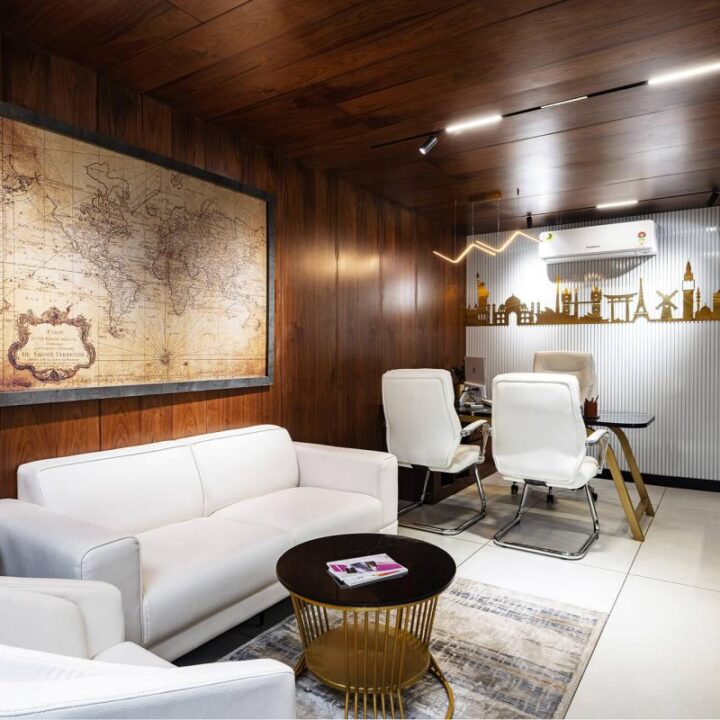
The executive cabin reflects a calm and professional environment suited for focused decision-making and meetings. Neutral grey textured walls paired with soft teal accents create a balanced palette that feels both contemporary and sophisticated.
Minimal furniture and clean work surfaces maintain visual clarity while allowing the space to remain practical and efficient for daily operations.
Large glass windows and interior openings maintain connectivity with the rest of the workspace while ensuring privacy.
Workstations & Collaboration Tables
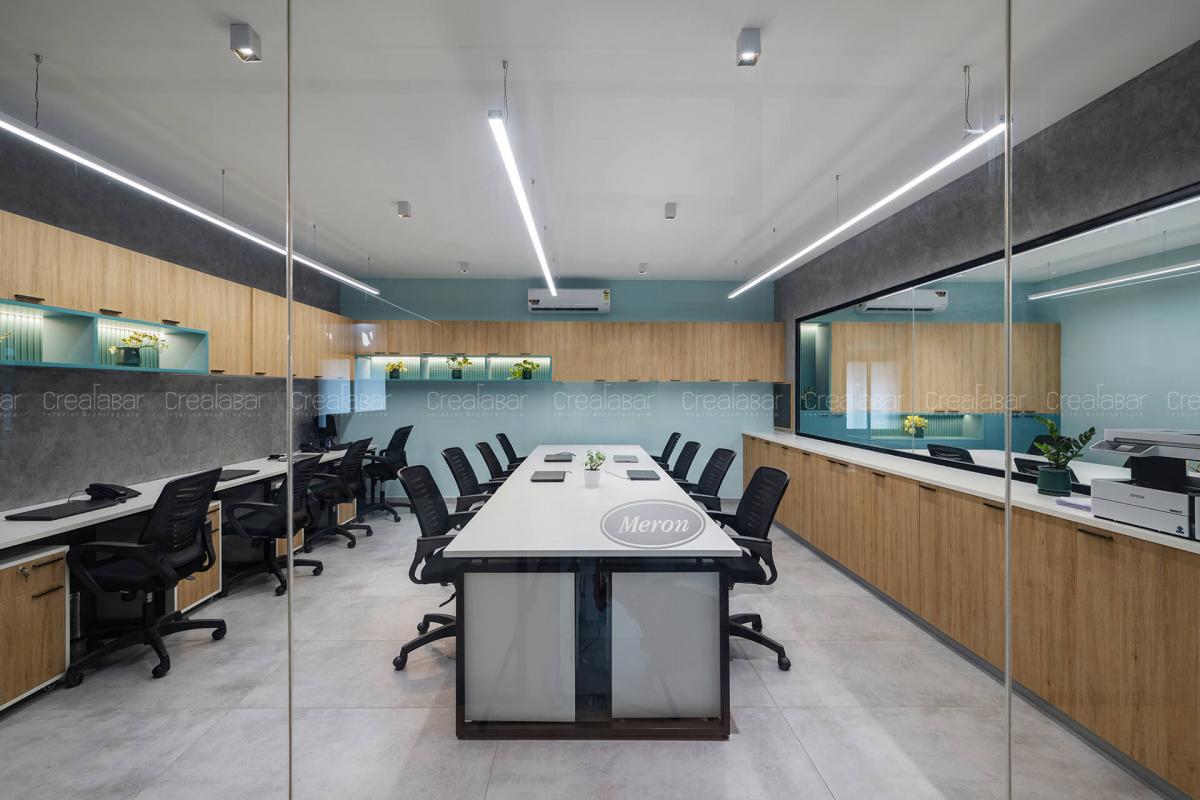
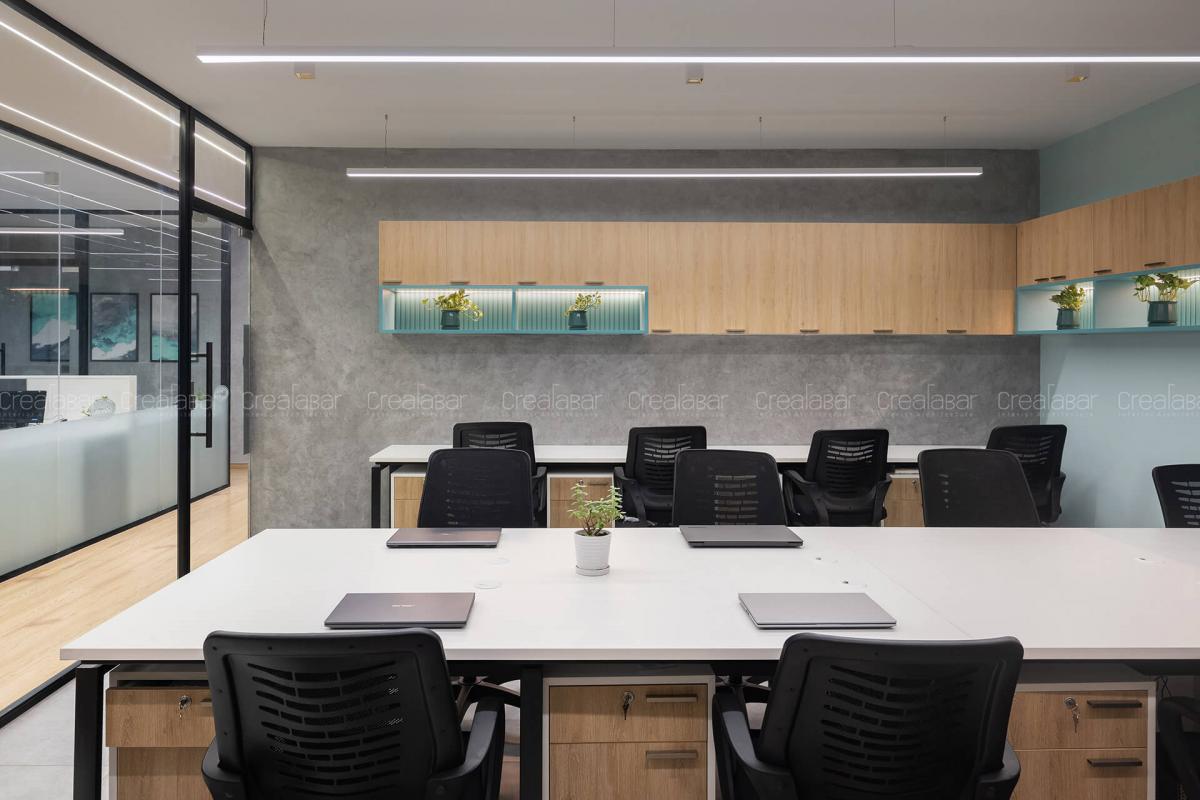
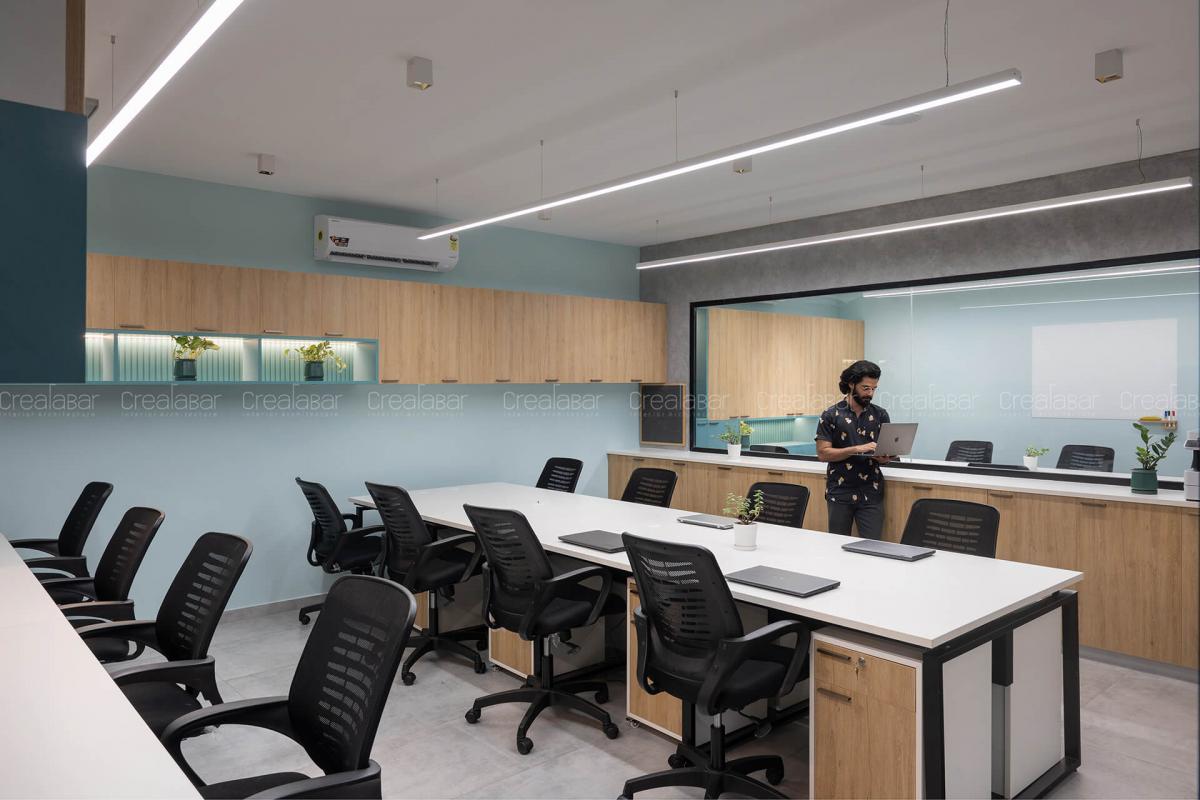
Shared work tables and individual workstations are designed with ergonomic furniture and organized layouts that promote efficiency and comfort. Neutral desks paired with ergonomic seating create a professional and cohesive workspace.
The use of integrated storage and clean cabinetry ensures that work areas remain clutter-free while providing sufficient functional support for daily operations.
These areas encourage both individual productivity and quick team interactions.
Pantry & Informal Interaction Space
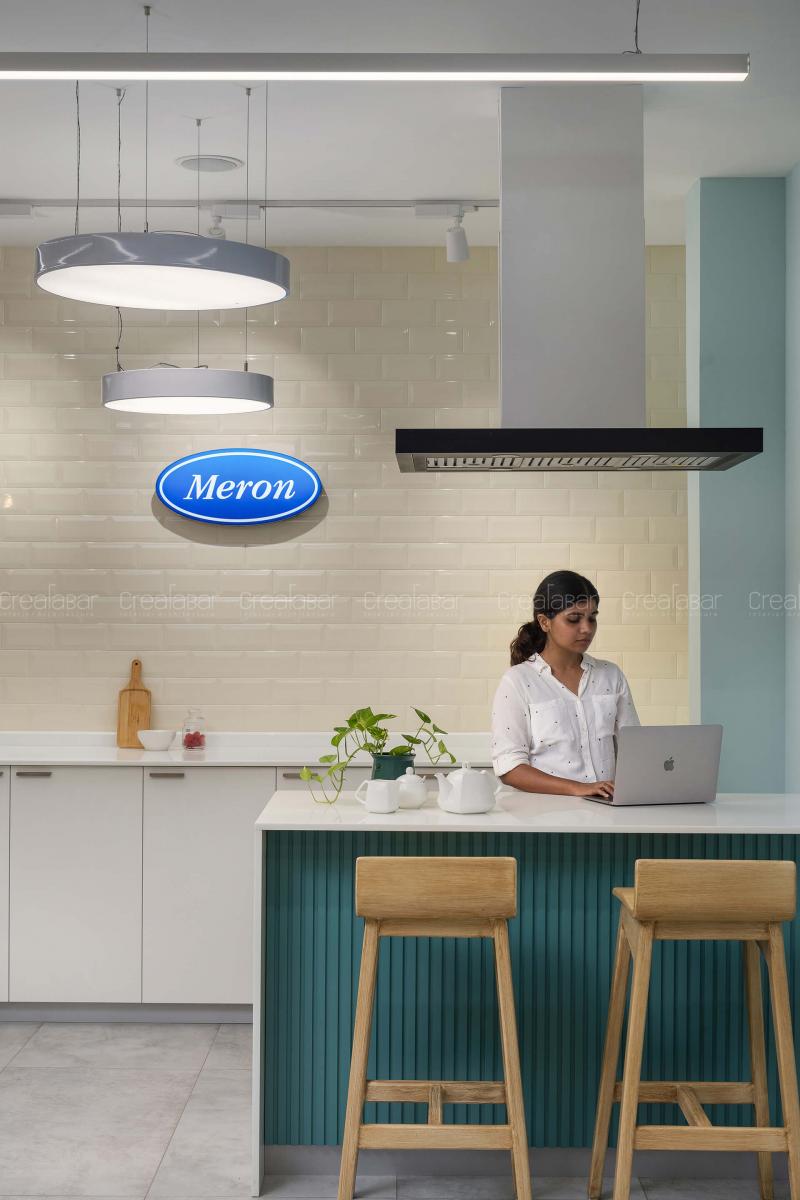
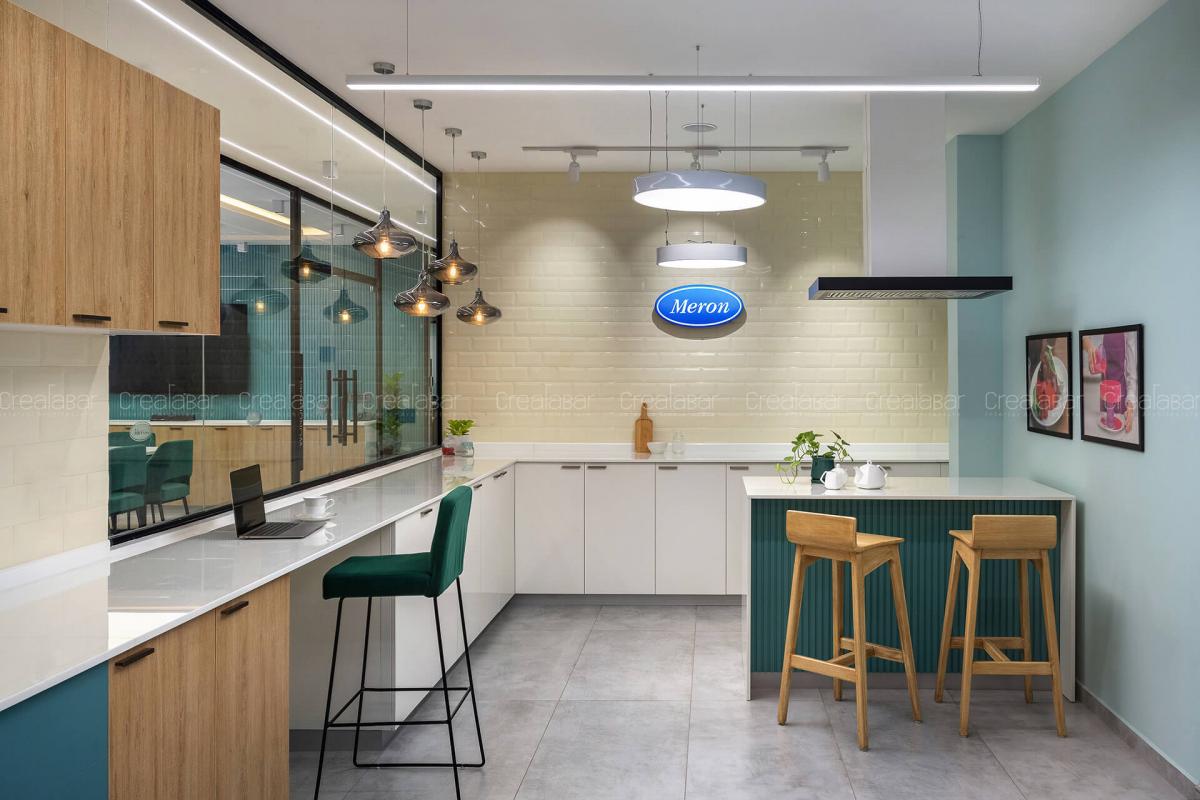
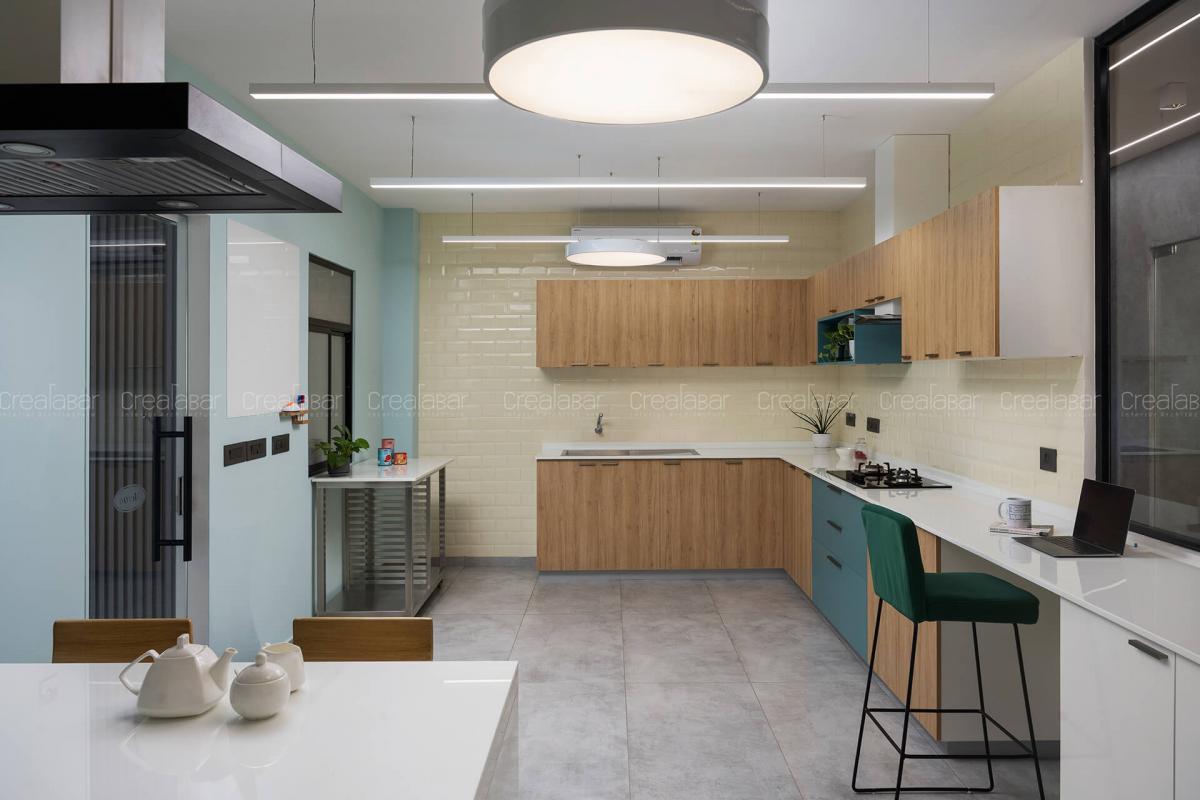
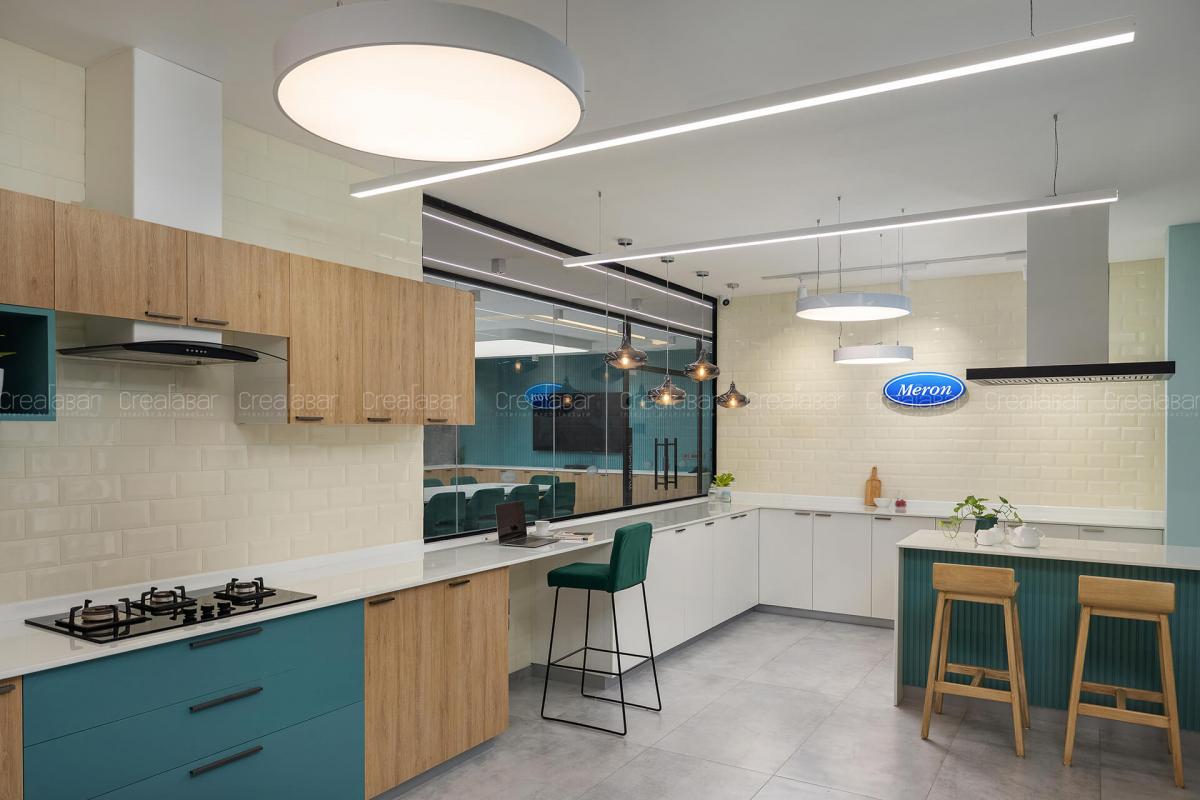
The pantry area introduces a lighter, more relaxed atmosphere within the office environment. Designed with a mix of warm wood cabinetry, white surfaces, and teal accents, the space offers employees a comfortable place to take breaks and interact informally.
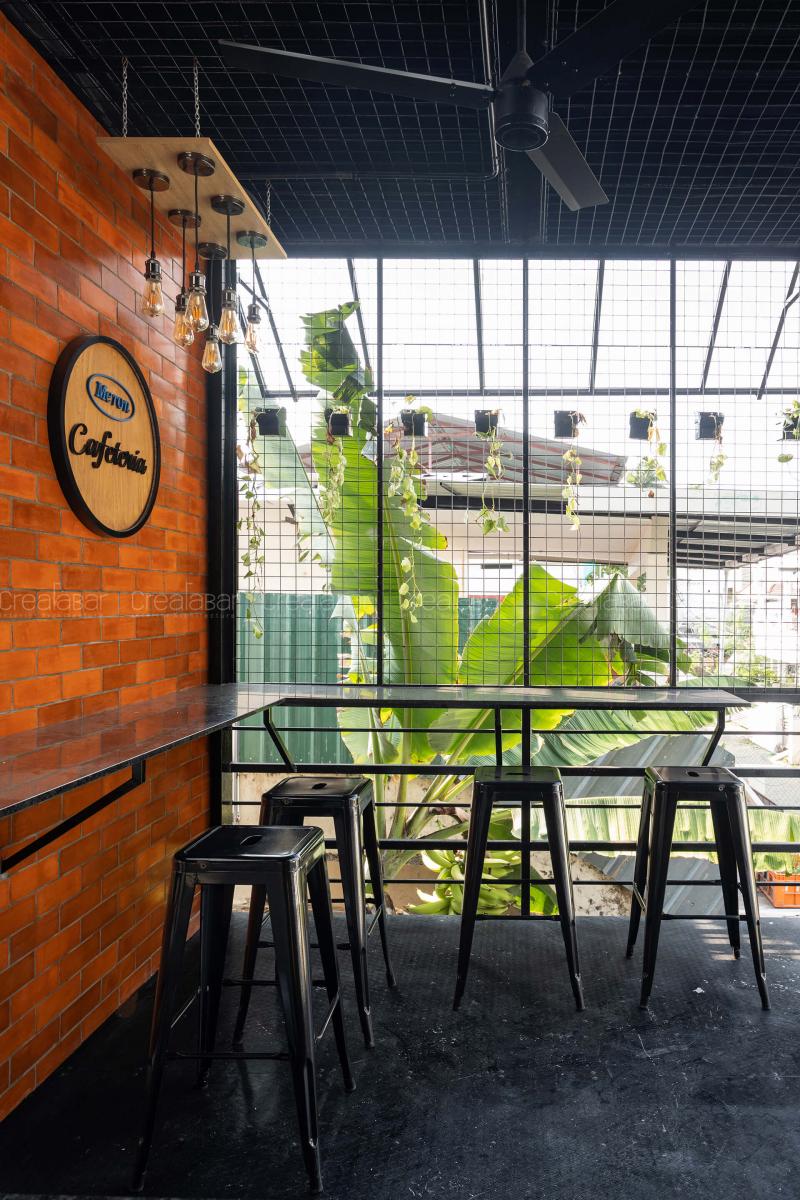
Pendant lighting, bar seating, and a small island counter create a café-like setting that encourages casual conversations and moments of relaxation.
Subway tile backsplashes and modern cabinetry bring a clean, contemporary feel while maintaining durability and practicality.
Circulation & Corridor Experience
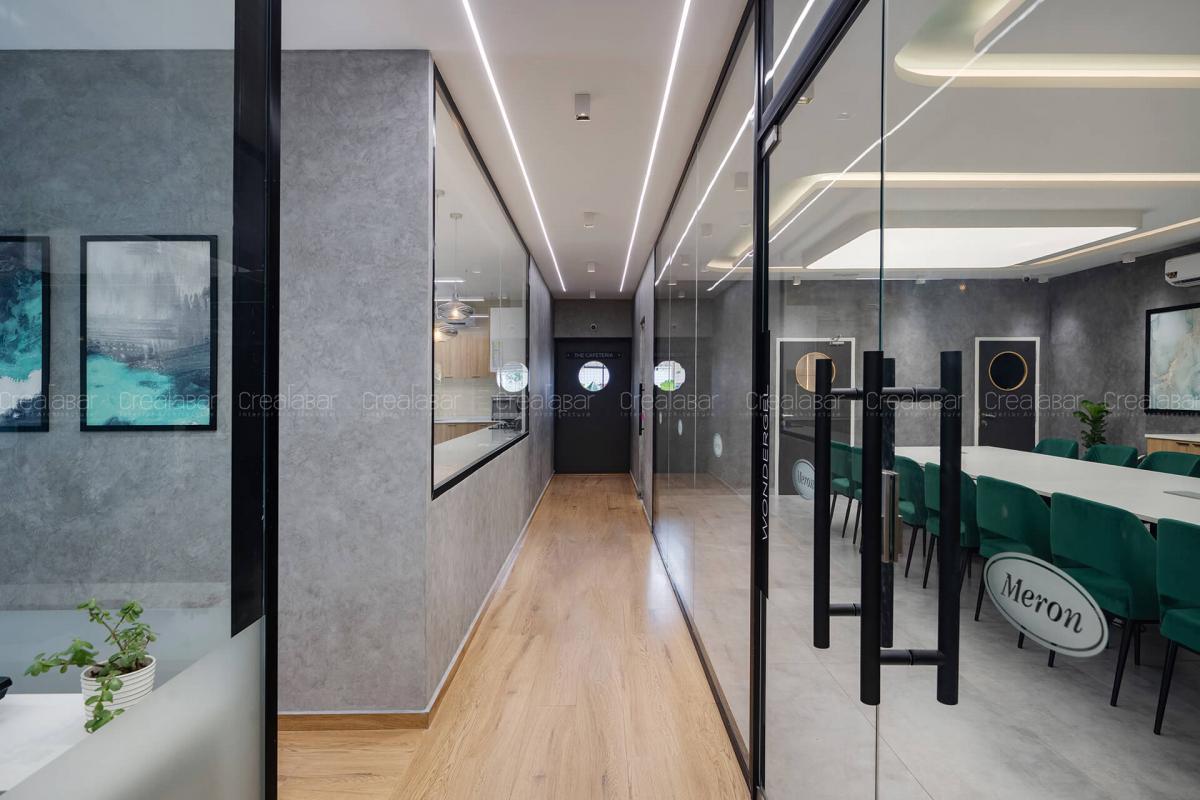
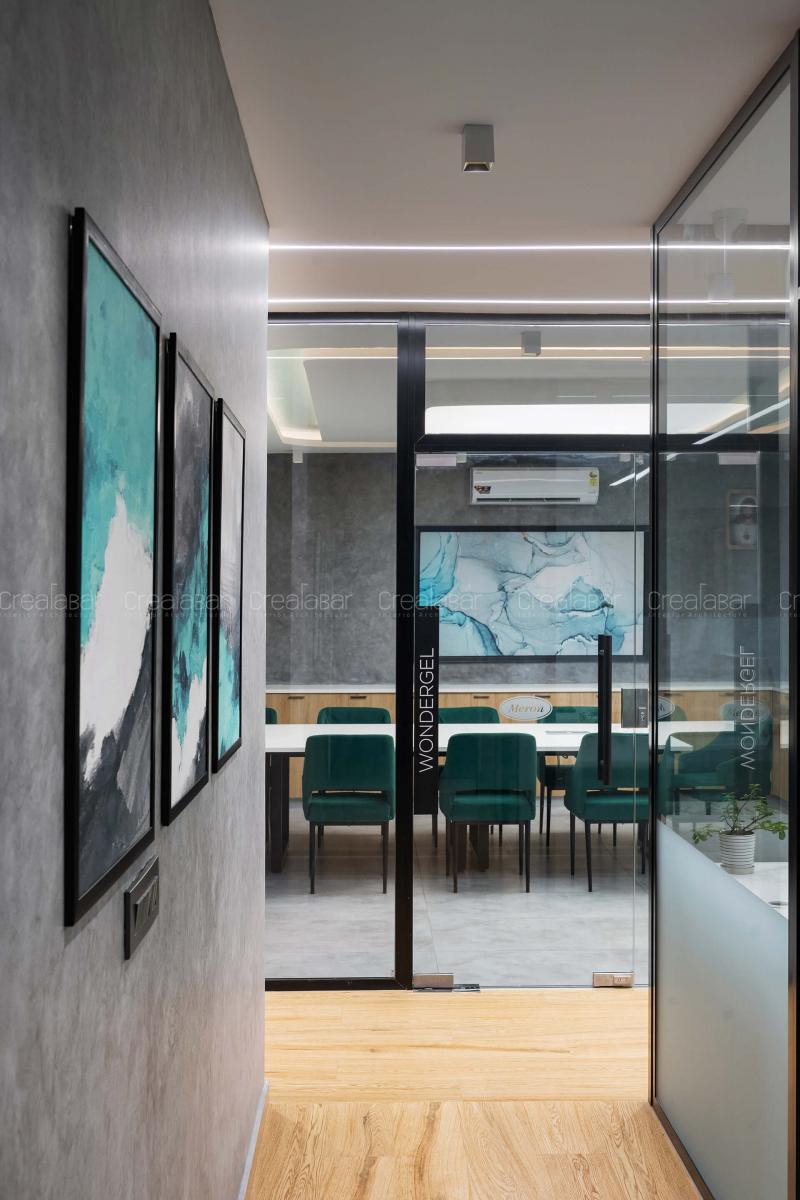
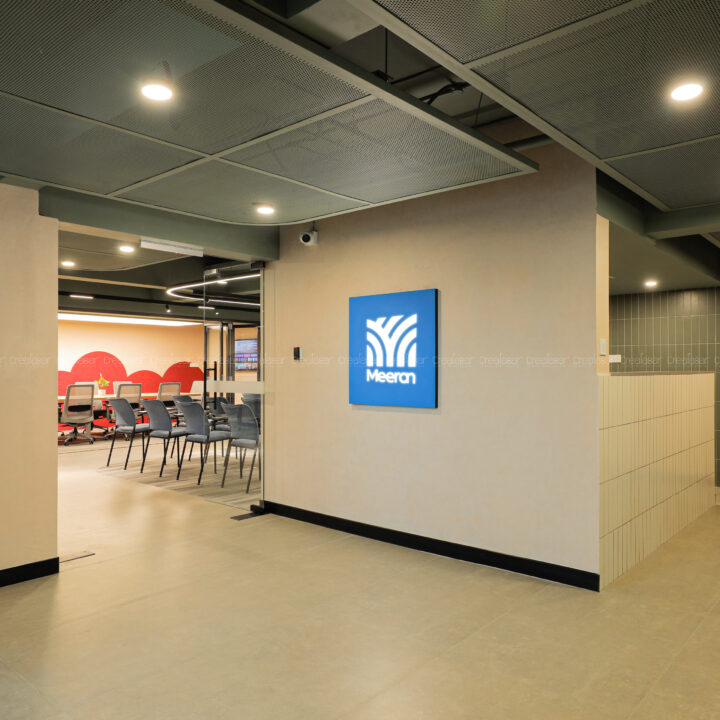
Corridors are designed to feel open and visually connected through the use of glass partitions and continuous ceiling lighting. Linear LED fixtures guide movement through the space while enhancing the architectural geometry of the interiors.
Wood flooring in transitional areas introduces warmth and helps visually differentiate circulation zones from workspaces.
Artwork and subtle decorative elements provide visual interest while maintaining the minimal design language.