- Home
- After Hours
After Hours
After Hours Clinic is designed as a warm and welcoming healthcare space that balances clinical functionality with residential comfort. Unlike conventional medical interiors that often feel sterile and intimidating, the clinic embraces a calm and approachable design language to make patients feel relaxed and cared for.
The design focuses on creating a soothing environment for both patients and healthcare professionals. Through the thoughtful use of natural materials, warm lighting, and soft color tones, the clinic delivers a healthcare experience that prioritizes comfort, efficiency, and emotional wellbeing.
Design Concept
The concept for After Hours Clinic is inspired by the idea of “healing beyond regular hours.” The space is designed to feel comforting and reassuring, particularly for patients visiting the clinic during late hours when a calming atmosphere becomes even more important.
Soft green accent walls, warm wood textures, and woven cane furniture elements create a natural and homely environment. The interior balances medical functionality with hospitality-inspired design, ensuring that the clinic feels less like a hospital and more like a comforting healthcare lounge.
Reception & Patient Arrival
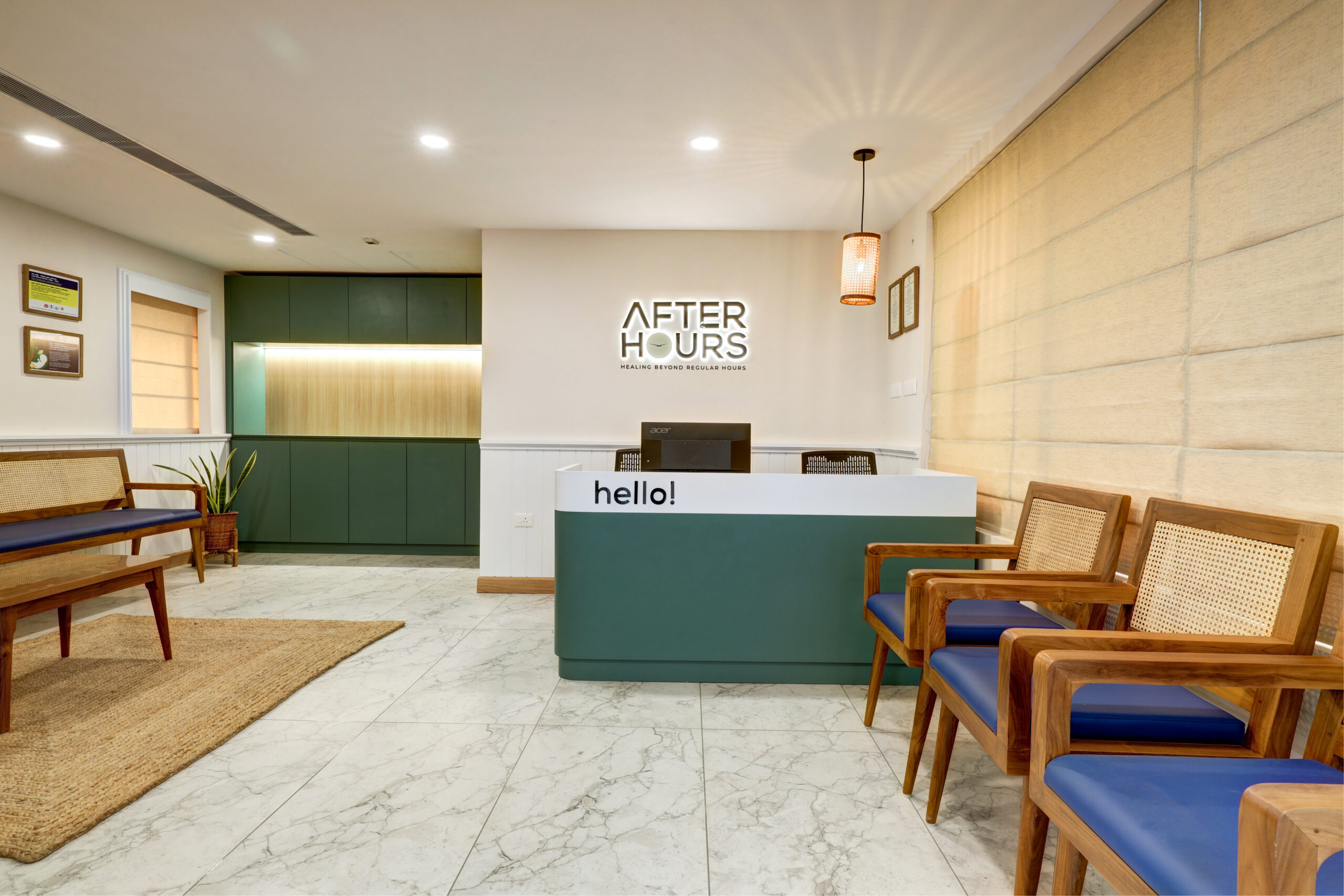
The reception area serves as the first point of patient interaction, designed to be welcoming and easy to navigate. A clean reception desk with subtle branding establishes the clinic’s identity while maintaining a calm and uncluttered appearance.
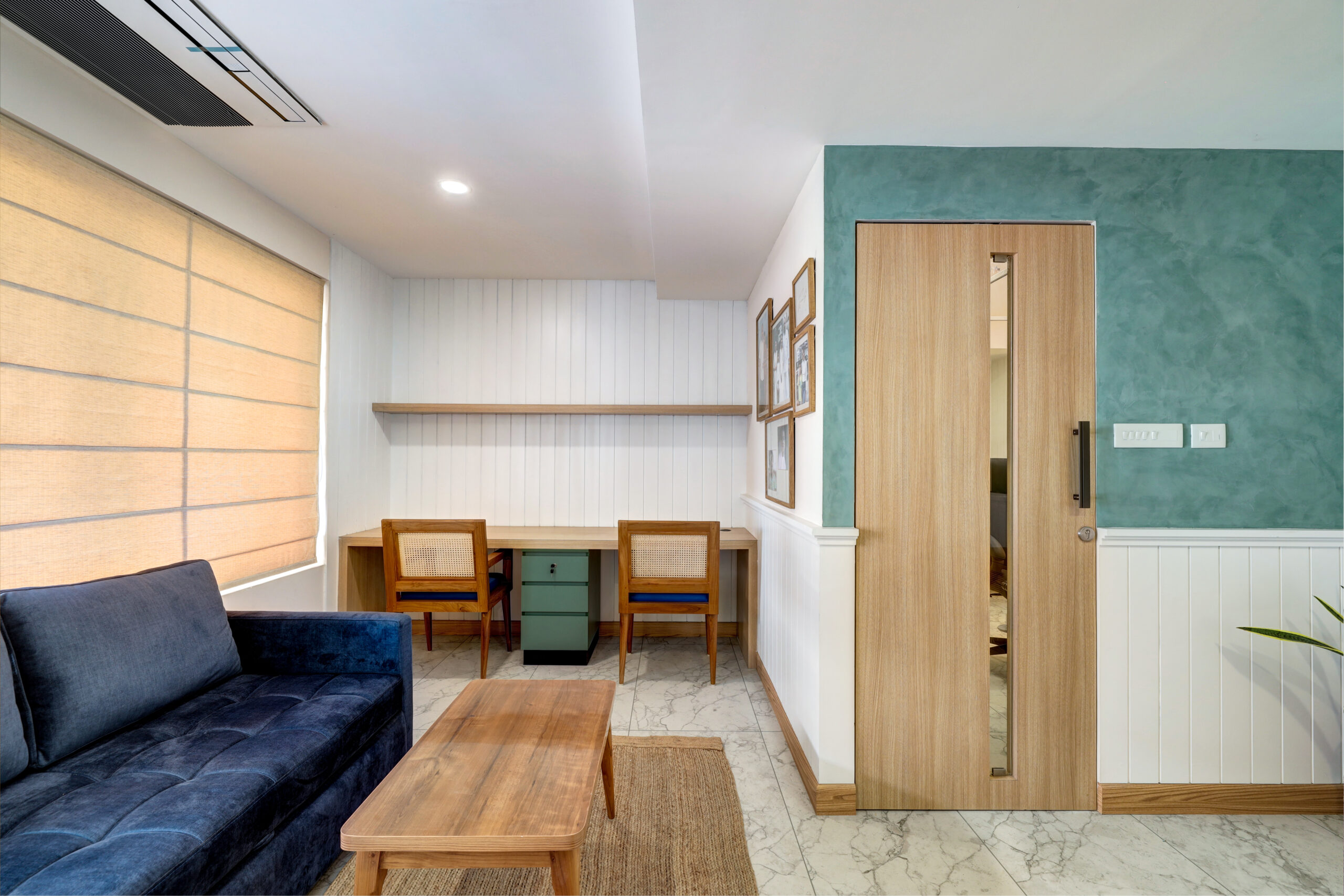
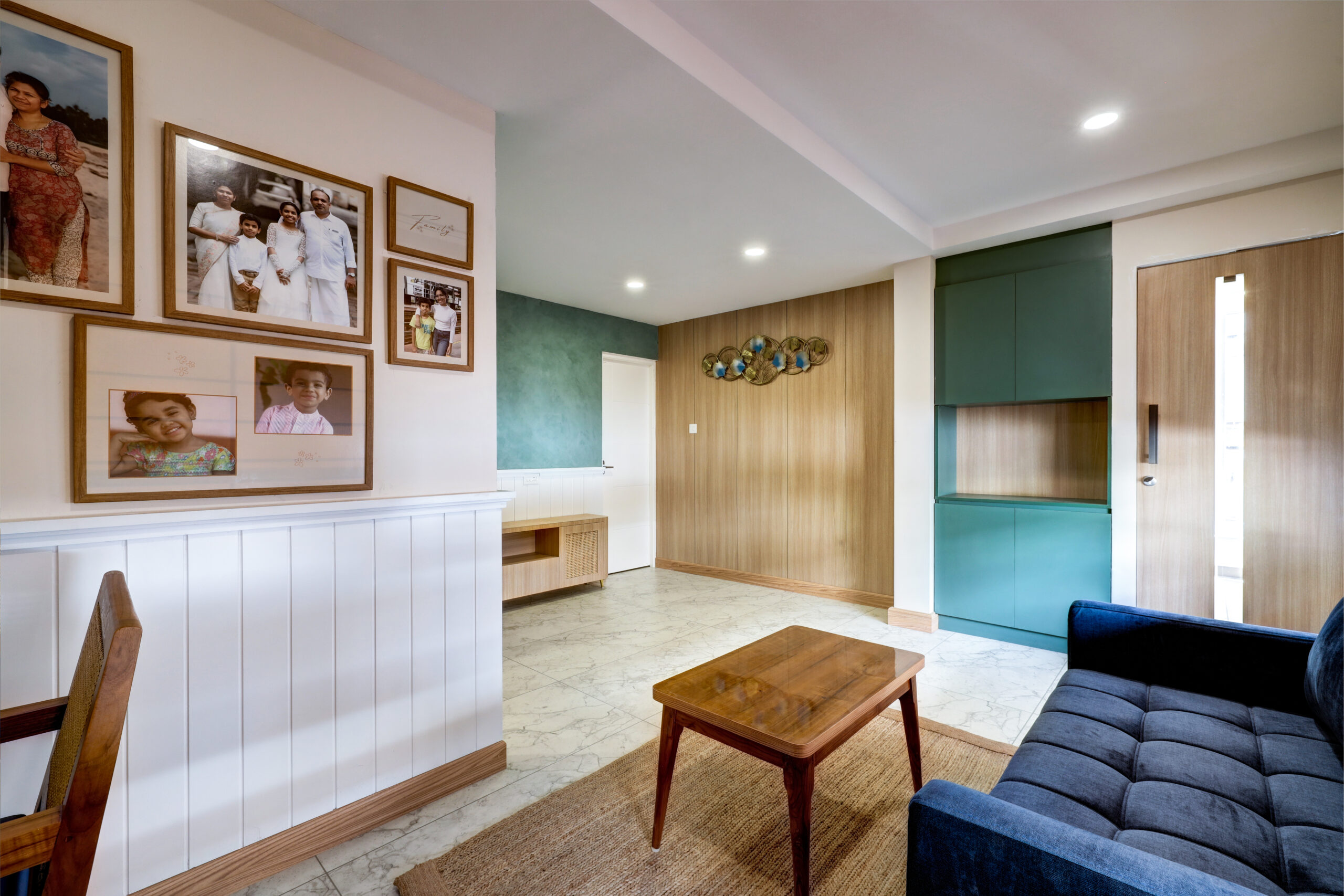
The waiting lounge is arranged with wooden seating and soft cushions that introduce warmth and familiarity. Natural textures such as cane furniture and woven rugs soften the clinical environment, creating a relaxing space where patients can comfortably wait before consultations.
Large windows with soft fabric blinds allow natural light to filter into the space, enhancing the calm and therapeutic atmosphere.
Waiting Lounge Experience
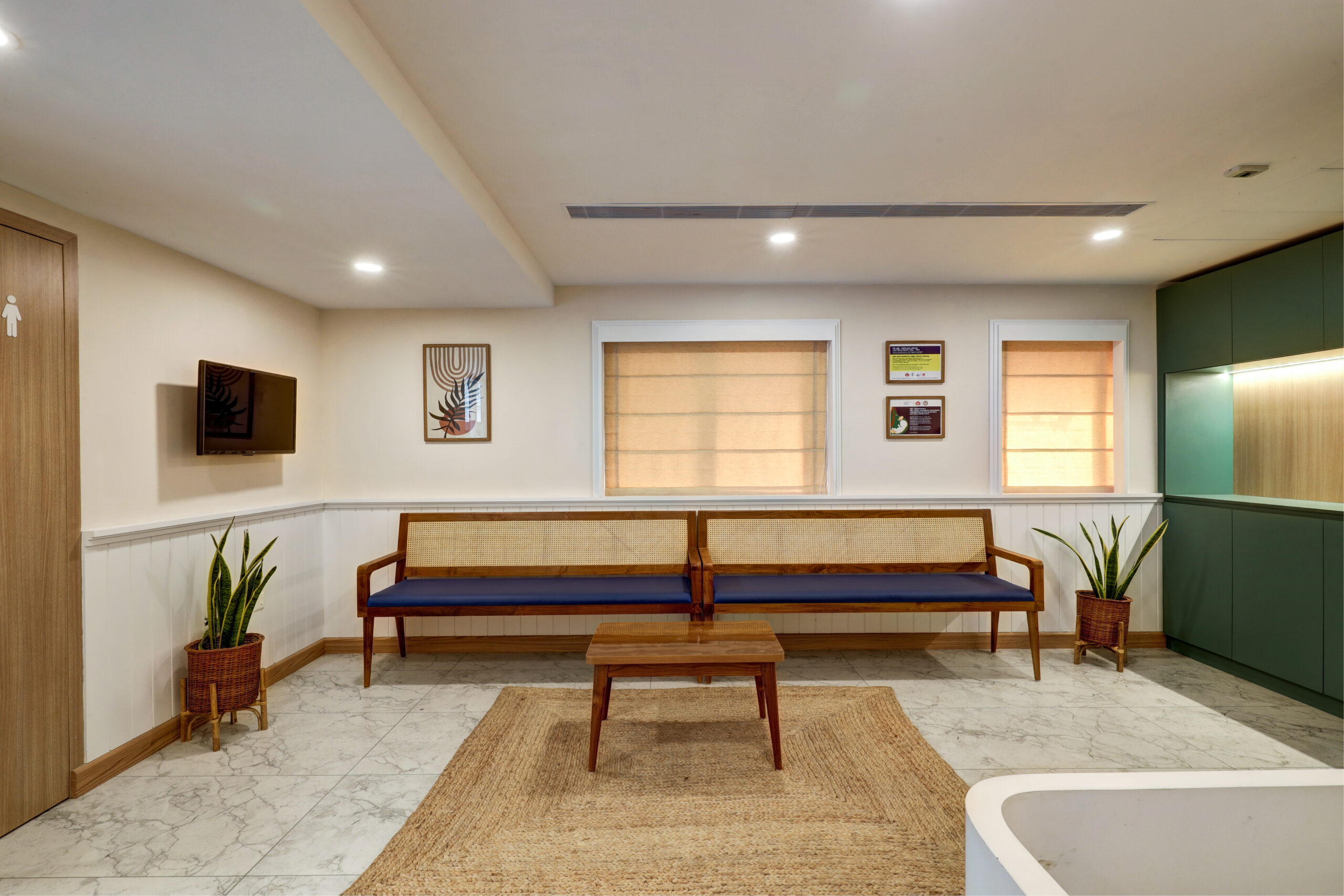
The waiting area is intentionally designed to reduce patient anxiety. Comfortable seating arrangements and warm wooden furniture create a lounge-like environment rather than a typical hospital waiting room.
Neutral wall finishes paired with subtle green accents introduce a sense of calm and freshness. Decorative elements such as framed photographs and indoor plants add a personal touch, making the environment feel approachable and human-centered.
This carefully curated atmosphere ensures that patients feel at ease while waiting for consultations or treatments.
Consultation & Doctor’s Cabin
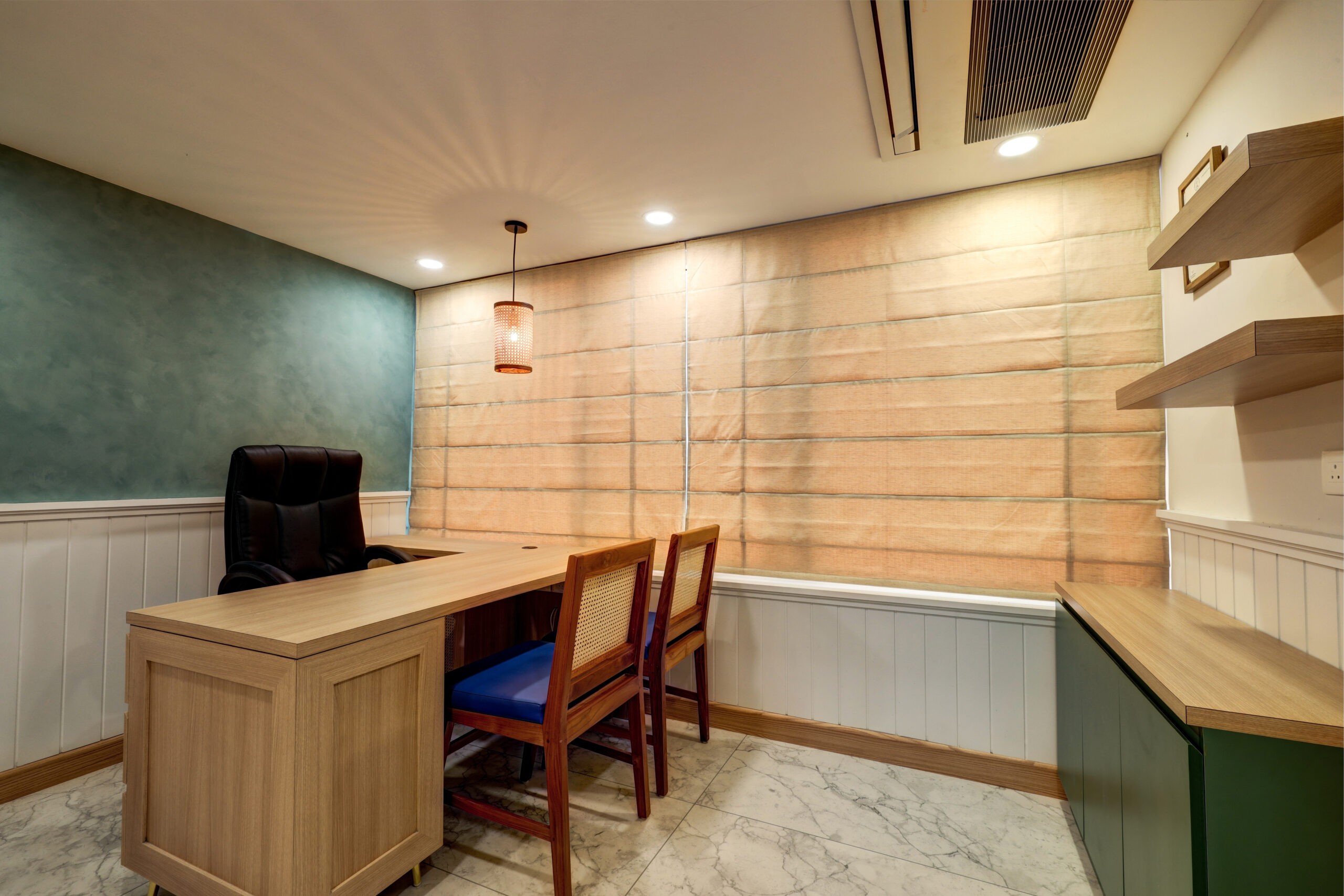
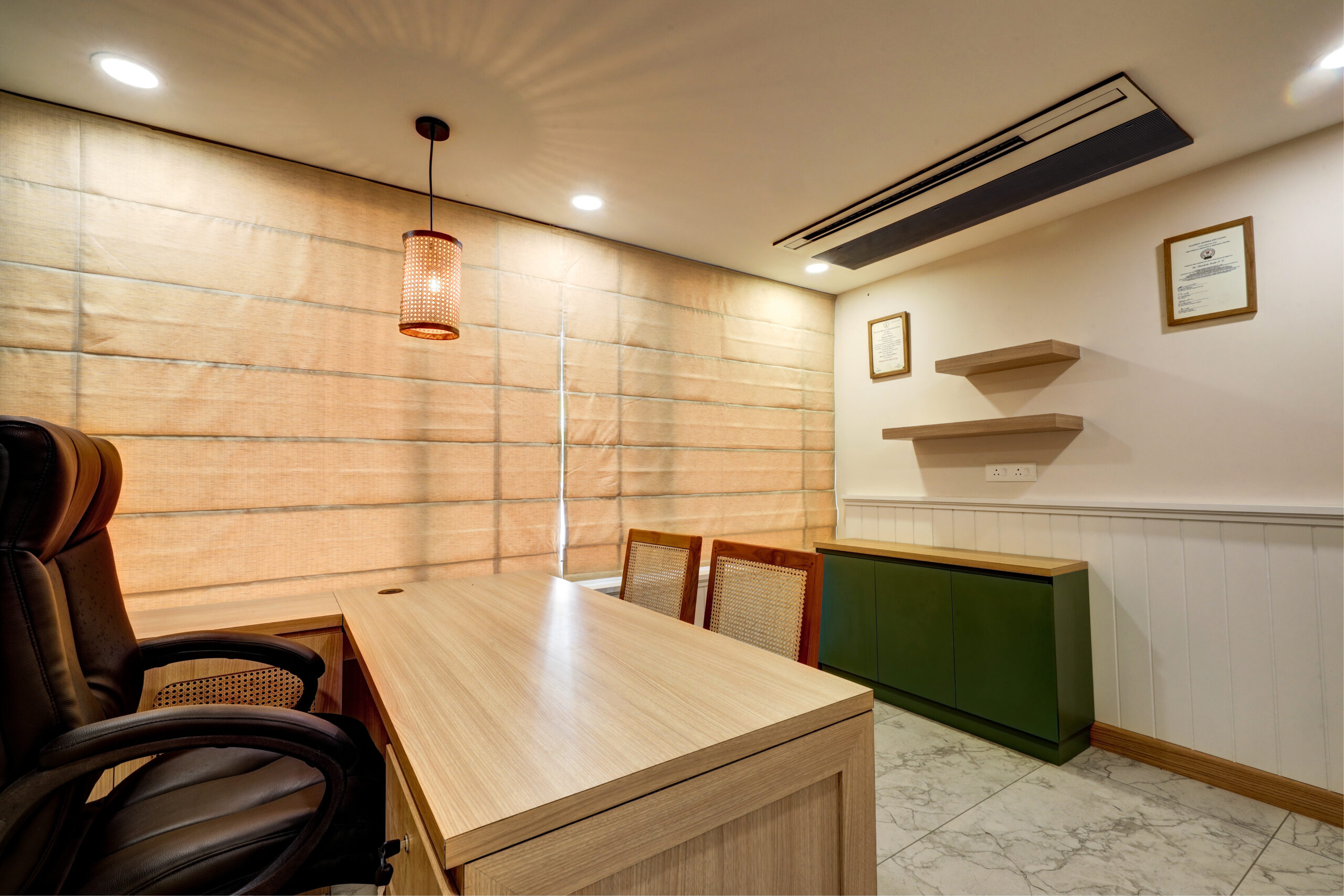
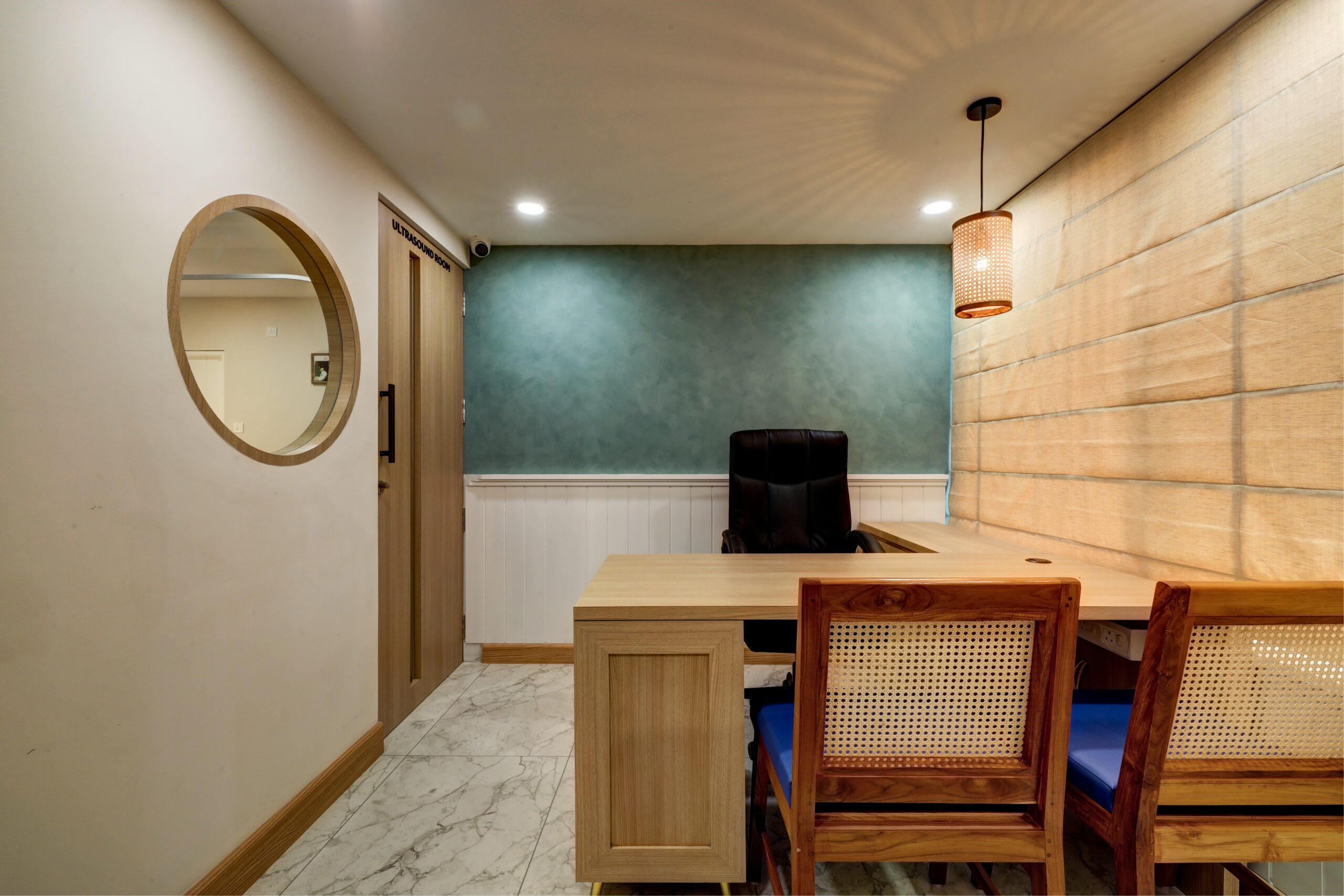
The doctor’s consultation room is designed to support confidential discussions, medical examinations, and patient consultations. A minimalist wooden desk paired with comfortable seating provides a professional yet friendly environment for patient interactions.
Soft pendant lighting and muted color tones help maintain a relaxed atmosphere during consultations. The design ensures that the doctor’s workspace remains efficient while allowing patients to feel comfortable discussing their concerns.
The consultation area also includes integrated storage and functional medical equipment, ensuring that the room remains organized and practical for everyday clinical use.
Clinical Workstations
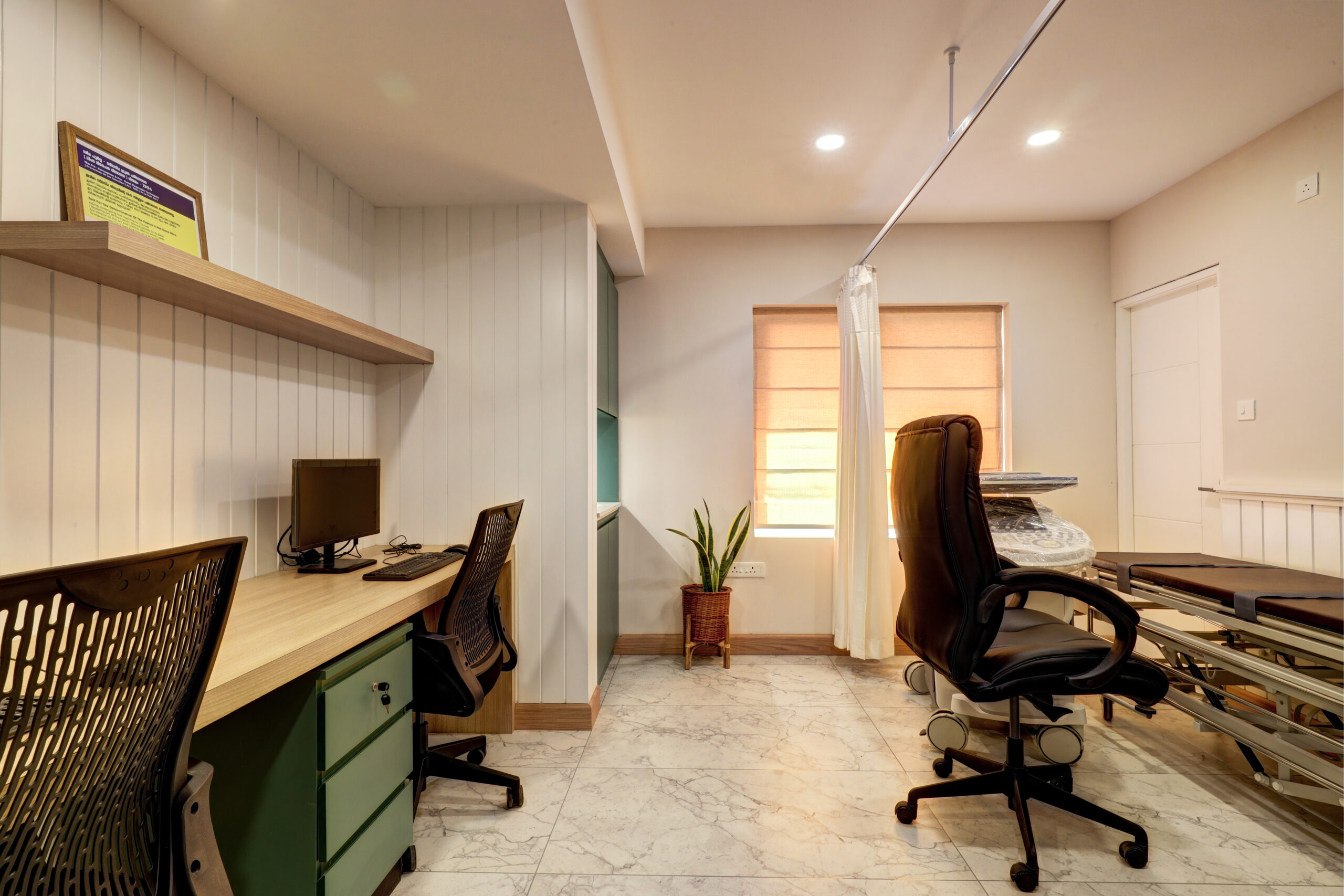
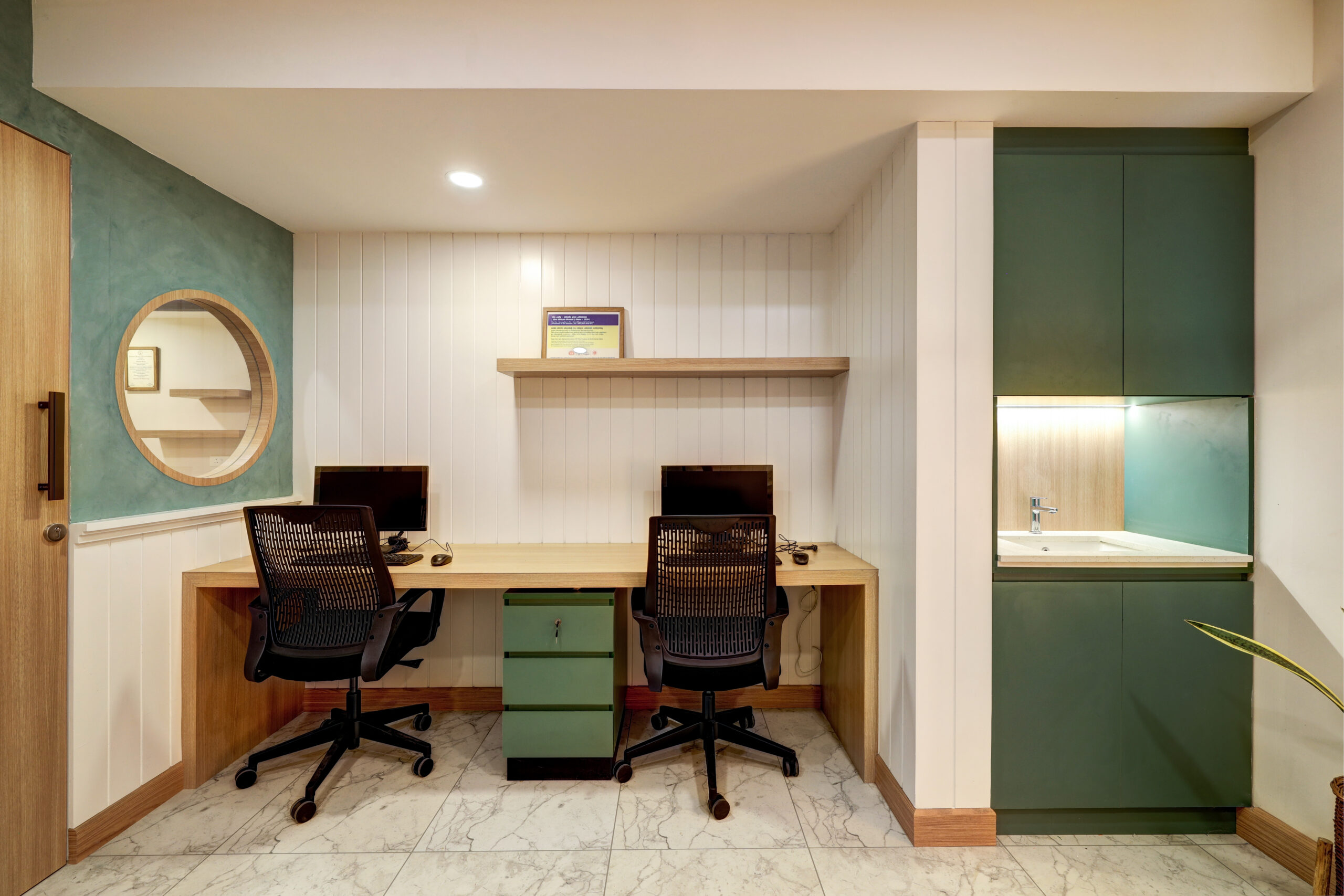
Dedicated workstations are designed for administrative tasks, patient documentation, and medical coordination. These areas incorporate clean-lined desks, ergonomic chairs, and built-in storage to support smooth clinic operations.
The workspace layout allows staff members to efficiently manage patient records, appointment scheduling, and internal communication without disrupting the calm atmosphere of the clinic.
Neutral tones and simple finishes help maintain visual consistency across the clinic interior.
Treatment & Examination Area
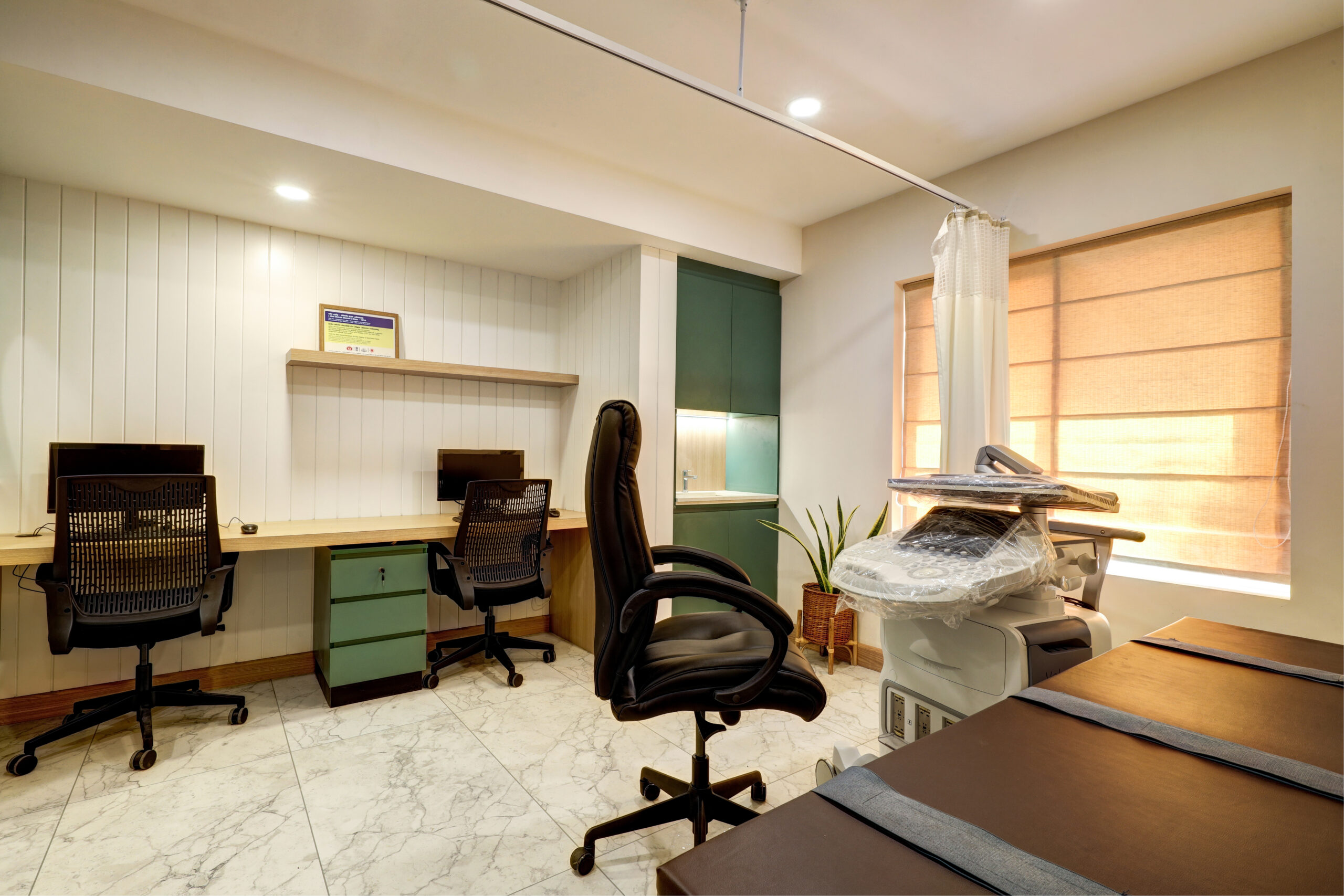
The treatment room is designed with a focus on functionality, hygiene, and patient comfort. Medical equipment and treatment beds are arranged to allow smooth circulation and easy accessibility for healthcare professionals.
Soft lighting and minimal décor ensure that the space remains calm and reassuring rather than intimidating. The layout also ensures privacy for patients during examinations and medical procedures.
The integration of clean surfaces and organized storage supports hygiene standards while maintaining visual simplicity.X
client:
Location:
COMPLETION:
Gross Built Area (m2/ ft2)